5 Questions to Ask About Your Organization’s Strategy

If you have a strong understanding of how culture affects your organization’s strategy then you have better ideas of creating strategies that are truly transformative for your organization. Having said that, most organizations don’t take the time to strategize about strategy development processes and thus are not fully aware of the intended and unintended effects of their pursuits. The three main reasons for this lack of awareness are:

  1. The fallacy that strategy should always be top-down
  2. The lack of a holistic approach to strategy development and feedback
  3. The half-baked idea that strategy can only be created by a few people

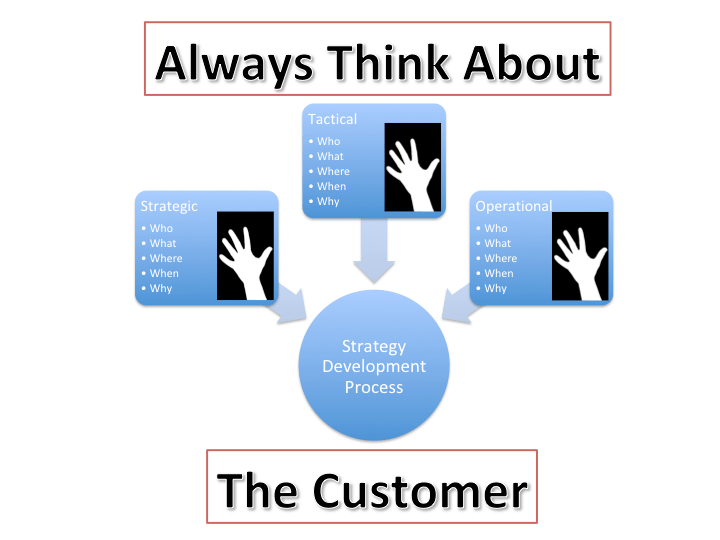
An organization’s overall strategy is a combination of policy and plan of action that is intended to improve the making, buying, or selling of goods and/or services for the customer. Thus, it becomes imperative for organizations to keep the customer at the center of what they do and create customer experiences that make their lives easier.

If you want the strategy to be something that is shelf-ware that looks pretty on an executives’ file cabinet and it is cool to the only talk about it then don’t read ahead. For those, if you want the strategy to be more than just an exercise then I would invite you to ask the following questions about strategy and strategy development processes within your own organization:

Strategic Perspectives on Strategy:


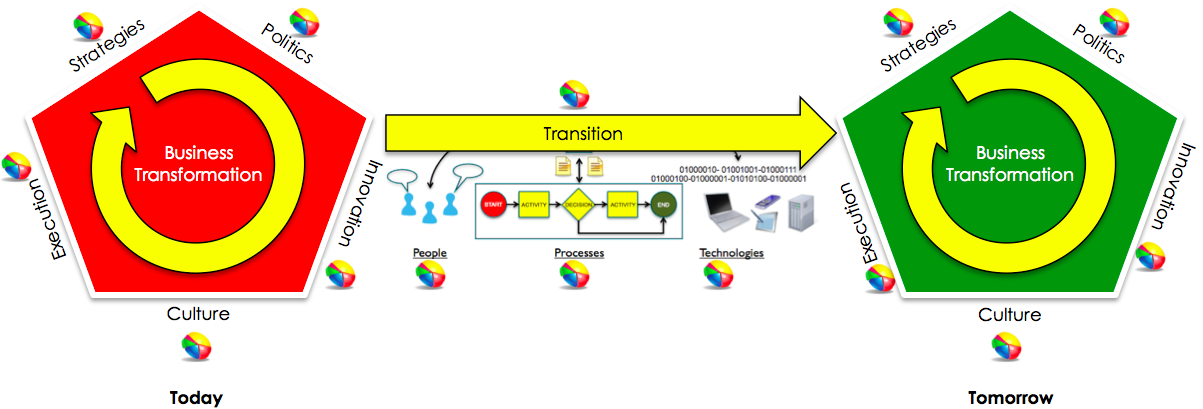
Today

Tomorrow

1.Who is incentivized at the executive level to create a strategy?Who should be incentivized at the executive level to create a strategy?
2.What governance structures are in place for transforming how strategy is created?What governance structures should be in place for transforming how strategy is created?
3.Where is the technology used to help strategy?Where should technology be used to help strategy?
4.When and how often strategic objectives are communicated?When and how often strategic objectives should be communicated?
5.Why holistic strategy development processes are critical to achieving strategic objectives?Why holistic strategy development processes should be critical to achieving strategic objectives?

Tactical Perspectives on Strategy:


Today

Tomorrow

1.Who is incentivized at the middle management level to give feedback on strategy?Who should be incentivized at the middle management level to give feedback on strategy?
2.What business units, functional areas, and teams are included to develop a strategy?What business units, functional areas, and teams should be included to create a strategy?
3.Where technology hinders strategy development processes?Where technology might hinder strategy development processes?
4.When is the start and end of meeting strategic objectives communicated?When should the start and end of meeting strategic objectives communicated?
5.Why strategy development processes are critical to achieving tactical objectives?Why strategy development processes should be critical to achieving tactical objectives?

Operational Perspectives on Strategy:


Today

Tomorrow

1.Who sees strategy development processes as an obstacle?Who might see strategy development processes as an obstacle?
2.What business processes provide views on the organization’s actual vs. perceived strategy?What business processes should provide views on the organization’s actual vs. perceived strategy?
3.Where is the technology part of your understanding of the organization’s strategy?Where should technology be a part of understanding the organization’s strategy?
4.When were you informed about the strategic objectives and strategy development processes?When should you have been informed about the strategic objectives and strategy development processes?
5.Why strategic objectives are critical to achieving your daily tasks?Why strategic objectives should be critical to achieving your daily tasks?

To be clear, strategy and strategy development affects everyone inside and outside your organization which includes executives, middle management, front lines employees as well as the customers you are trying to acquire. Thus, your organization’s strategy development processes should be robust enough that they take long-term holistic views but also flexible enough to cater for bumps and take advantage of technological advancement.

5 Questions to About Your Organization's Strategy

Processing…
Success! You're on the list.

Business Agility and Digital Transformation

What is Business Agility?

  • Business is “the activity of making, buying, or selling goods or providing services in exchange for…”
    • Corporations –> Money
    • Non-profits –> Social Causes
    • Education –> Knowledge
    • Government –> Citizen Services
    • Military –> National Defense
  • Agility is the “ability to move quickly and easily.”
  • Business Agility is the ability to move quickly and easily to:
    • Make products and services
    • Buy products and services
    • Sell products and services
    • Provide products and services

to employees and customers along with the ability to effectively and efficiently collaborate with partners and vendors.

What is Digital Transformation?

  • Digital is “electronic and especially computerized technology.”
  • Transformation is “an act, process, or instance of transforming or being transformed.”
  • Digital Transformation is the process of transforming:
    • How things are made
    • How things are bought
    • How things are sold
    • How products and services are provided
  • through electronic and especially computerized technology.

What are the Relationships between Business Agility and Digital Transformation?

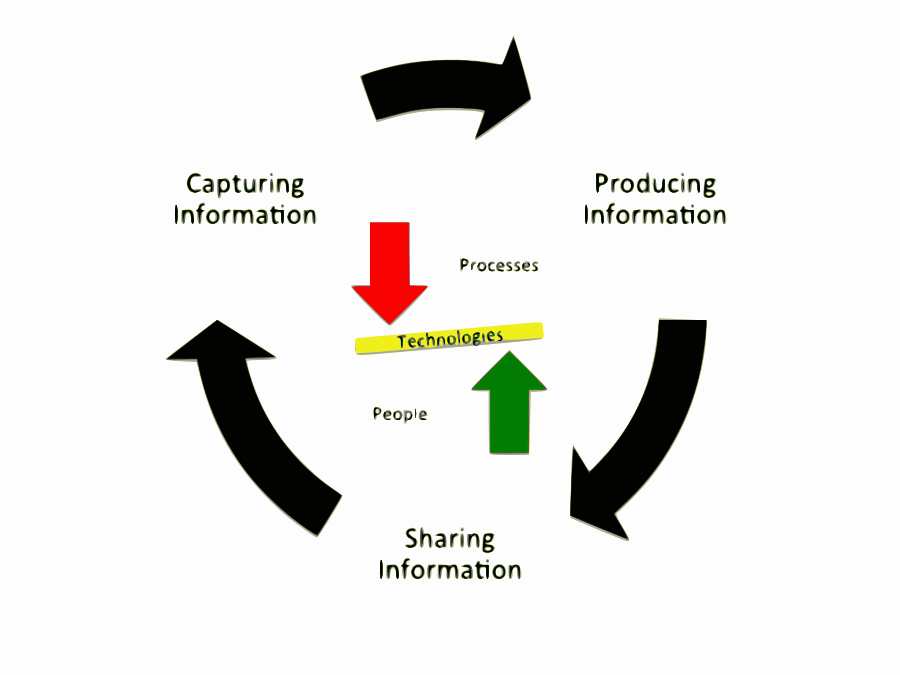
  • All organizations are digital in one way or another. Some are more digital and some are less but fundamentally they utilize a mix of the following to achieve their desired outcomes and capabilities:
    • People who use technologies
    • Processes enabled by technologies
    • Technologies to capture and synthesize data
  • In order for your organization to survive and thrive in today’s hyper-competitive business environments, your organization should have:
    • People who can quickly make decisions on how products and services are created, bought, sold and provided
    • Processes that reduce the time between data capture to informed decision-making
    • Technologies that capture, manage and disseminate data quickly to decision-makers

Note that without Digital Transformation, achieving Business Agility is a hallucination!

Understand your Today to Create your Tomorrow

  • Do an honest and comprehensive analysis of how business is done currently
  • Holistically understand how current people, processes, technologies, products and services (business and technical) are affected by Strategies, Politics, Innovation, Culture and Execution (SPICE) factors
  • Determine if current capture of KPIs, SLAs and other metrics (e.g., employee incentives) are just for collection or are these measurements truly bringing change within the organization
SPICE Factors

While it is great to imagine and document your future, but any shortcuts you take in the assessing your present will come back to haunt you in the future!

Analysis

Today (Where you are)

  • Create a list of roles and responsibilities for everyone in your organization, partners, and vendors
  • Map hybrid business processes that show people-technology interactions
  • Determine what data is being captured, managed and disseminated during people-technology interactions
  • Determine the relevancy of the data for informed decision-making
  • Assign a cost to each business process
  • Assess how quickly and easily your organization can respond to employee and customer needs
  • Determine the various obstacles that result in poor execution of strategy
  • Understand organizational and individual biases

Tomorrow (Where you want to be)

  • Eliminate overlapping and redundant roles and responsibilities that don’t provide value to your organization
  • Create governance, functions, teams and business processes that optimize the use of data across people and technologies
  • Create metrics that result in effective decision-making and lessons learned to improve those metrics
  • Communicate effectively to eliminate any preconceived notions of your transformation journeys
  • Create test labs for all employees to test business models, enhance current capabilities and new capabilities
  • Create a new culture through norms, standards, communications, and incentives and know that not everyone is motivated by the same things
  • Continuously self-evaluate your maturity level and make use of lessons learned

Asking Questions

  • Strategy
    • Who is affected by transformation?
    • What siloed/outdated/imaginary/undocumented processes are affecting strategic execution?
    • What technology and non-technology tools are used to make a strategic decision?
  • Politics
    • Who is distorting transformation communications?
    • What processes and data are leading to transformation easily being vetoed?
    • What technologies’ decisions are empowering transformation?
  • Innovation
    • Who is assessing frontline employees, external customers, similar industries and different industries to bring innovation to the organization?
    • What processes are in place to raise people’s ability to contribute?
    • Are there technologies to test out new capabilities and business models?
  • Culture
    • Who is motivated to participate in transformation journeys?
    • What kind of processes are in place to encourage culture change?
    • What kinds of technologies are used to assess culture and changes?
  • Execution
    • Who is setting the expectation at all levels for the transformation journeys?
    • What processes are in place that obstructs strategic execution?
    • What technologies are in place that obstructs strategic execution?

Transitions

  • Organizational Structures
    • Optimize organizational structures based on a mix of functions, products, services, and geography
    • Create formal and informal strategic linking through processes and coordination
  • Governance and Processes
    • Create governance structures and processes to evaluate how data can be captured, managed, modeled, assembled and deployed
  • People
    • Find people from top, middle, and frontlines to champion transformation journeys
    • Show how transformation actually makes people’s lives easier
  • Program Mission
    • Views transformation journeys as an investment portfolio of multiple projects and operations
    • Connects business and technical operations to business capabilities and outcomes
    • Measures relevant metrics and abandon irrelevant metrics that cannot be connected to business value
    • Creates alignment of IT with non-IT functions (e.g., Accounting, Administration, Business Development, Customer Service, Finance, HR, Management, Manufacturing, Operations, Productions, R&D, Sales, etc.)
    • Creates effective feedback loops across the organization

Processing…
Success! You're on the list.

5 Questions to Ask About Your Organization’s Politics

Politics in an organization is about influencing others by using official and unofficial power. Official power comes from management titles while unofficial power comes from peers, juniors and even outsiders. Every day in organizations official and unofficial power is used to (1) frame problems, (2) influence changes and (3) make/guide decisions. This power can affect organizational structures, business processes, technologies, and even innovation. Thus, it becomes imperative that organizations understand this power and how this power can affect organizational cultures. However, despite the strong relationship between politics and culture, most organizations are unaware, unwilling and/or unprepared to address it. The three main reasons politics is not directly addressed is because of:

  1. The inaccurate thinking that politics is always negative
  2. The fallacy that politics only happens at an individual’s personal level
  3. The inability to understand how politics can destroy/enhance capabilities

An organization’s politics is the total complex of relationships between people inside and outside of organizational boundaries. What this means is that people play politics even if they are unaware of it. While these people might have the best of intentions but their experiences/biases may or may not be best for the entire organization. By not keeping this in mind, organizations might not be able to self-assess if the IT vs. Business tension is a myth or reality, if the most optimized and continuously improving processes are present, if the correct technology is being selected for collective efficiency, if the right people are asking the right questions and if questioning the status quo is just a checkmark. In order to understand politics, the following questions need to be asked:

Strategic Perspectives on Politics:


Today

Tomorrow

1.Who is incentivized at the executive level to understand politics?Who should be incentivized at the executive level to understand politics?
2.What governance structures are in place to address holistic vs. specific unit/function/team strategic needs?What governance structures should be in place to address holistic vs. specific unit/function/team strategic needs?
3.Where is technology being affected by politics?Where should technology affect politics?
4.When and how often political motivations are revealed?When and how often political motivations are revealed?
5.Why political understanding is critical to achieving strategic objectives?Why should political understanding be critical to achieving strategic objectives?

Tactical Perspectives on Politics:


Today

Tomorrow

1.Who is incentivized at the middle management level to understand politics?Who should be incentivized at the middle management level to understand politics?
2.What business units, functional areas, and teams are included to bring forth political implications?What business units, functional areas, and teams should be made aware of political implications?
3.Where technology hinders understanding politics?Where technology might hinder understanding politics?
4.When is the start and end of political motivations?When should be the start and end of political motivations?
5.Why political understanding is critical to achieving tactical objectives?Why political understanding should be critical to achieving tactical objectives?

Operational Perspectives on Politics:


Today

Tomorrow

1.Who sees politics as an obstacle?Who might see political understanding as an obstacle?
2.What business processes provide views on the organization’s power plays?What business processes should provide views on the organization’s political boundaries?
3.Where is technology part of your understanding of the organization’s politics?Where should technology be a part of understanding the organization’s politics?
4.When were you informed about the political objectives?When should you have been informed about political objectives?
5.Why political understanding is critical to achieving your daily tasks?Why political understanding should be critical to achieving your daily tasks?

Politics and culture are two sides of the same coin and each lurking in the shadows or showing in broad daylight to change the direction of the organization every day. To address this, (1) be transparent, (2) create an atmosphere of trust, (3) be genuinely helpful across business units, functional areas, and teams.

Politics-Culture

Processing…
Success! You're on the list.

5 Questions to Ask About Your Enterprise Content Management (ECM)

The term Enterprise Content Management (ECM) is used to describe the strategies, methods, and tools to produce, share and capture information in organizations. Humans and/or computer systems use this structured (e.g., data in databases), semi-structured (e.g., social media) and unstructured (e.g., emails) information to make decisions that can improve the organization. Since every individual/team/group/unit/department produces and consumes information thus it becomes imperative that organizations start thinking about how to provide the right information to the right audience at the right time by taking into account how information flows holistically across the organization.

Organizations need to create the right balance between humans and/or computer systems to leverage information from internal and external sources. This balance comes from the understanding that humans and computer systems are both influenced by experiences and biases. The experiences and biases in computer systems emerge when humans decide (1) which data should be used, (2) how algorithms should use the data and (3) when to accept or reject the recommendations of the computer systems.

In today’s world, Big Data has captured the imagination of most organizations and how it can help improve them. Organizations are collecting more and more data every day, writing algorithms and mining for patterns to use this data for descriptive analytics, predictive analytics, prescriptive analytics, and even Artificial Intelligence. However, if an organization’s Big Data strategy lacks an ECM mindset and does not have mature data management governance processes in place then organizations would not be able to fully release the true potential of the information they continue to produce, share and capture.

To start having an ECM mindset for Big Data, organizations need to (1) identify the different structured, semi-structured and unstructured internal/external information sources consumed and produced by the organization, (2) identify all the obstacles in the smooth flow of information and (3) train all individuals to see all data as assets to be leveraged.

First, let’s identify some of the internal and external information sources. Here is a non-exhaustive list to get started:

  • Accounting Software and Systems
  • Architecture Software and Systems
  • Artificial Intelligence Software and Systems
  • Analytics Software and systems
  • Architecture Software and Systems
  • Barcodes and Quick Response (QR) codes
  • Books and Blogs
  • Business Case Software and Systems
  • Business Development (BD) Software and Systems
  • Business Intelligence (BI) Software and Systems
  • Business Process Management (BPM) Software and Systems
  • Business, Analytics, and IT dashboards
  • Cloud, Managed Services and Anything-as-a-Service (XaaS) Metrics
  • Computer Output to Laser Disc (COLD)/Electronic Report Management (ERM)
  • Construction Software and Systems
  • Consumer Electronics
  • Customer Relationship Management (CRM) Software and Systems
  • Customer Service Software and Systems
  • Databases, Data Warehouses, Data Marts and Data Lakes
  • Decision-Making Software and Systems
  • Delivery Software and Systems
  • Document Management (DM) Software and Systems
  • Document Software and Systems
  • Electronic Data Interchange (EDI)
  • Electronic Data Processing (EDP) Software and Systems
  • Emails, Instant Messages (IM), Web Chats and Mobile Chats
  • Expert Software and Systems
  • Enterprise Architecture (EA) Repositories
  • Enterprise Resource Planning (ERP) Software and Systems
  • Extensible Markup Language (XML)
  • Financial Software and Systems
  • General Administration Software and Systems
  • Global economic trends and reports
  • Governments, Colleges, Universities, and Internal R&D Departments
  • Handprint Character Recognition (HCR) Software and Systems
  • Human Resources (HR) Software and Systems
  • Images and videos
  • Industry, Competitor, Partner and Vendor reports
  • Information Technology (IT) Software and Systems
  • Innovation and R&D Software and Systems
  • Intelligent Character Recognition (ICR) Software and Systems
  • Internet of Things (IoT) Software and Systems
  • Inventory Software and Systems
  • Investment Software and Systems
  • Legal and Insurance Software and Systems
  • Learning Management Software and Systems
  • Lessons Learned Software and Systems
  • Log Files and Incident Report Software and Systems
  • Manufacturing Software and Systems
  • Marketing Software and Systems
  • Network Software and Systems
  • Operations Software and Systems
  • Optical Character Recognition (OCR) Software and Systems
  • Optical Mark Recognition (OMR) Software and Systems
  • Paper and Electronic Documents
  • Paper and Electronic Forms
  • Partners, Vendors and Consumer Electronics
  • Payroll Software and Systems
  • Phone Software and Systems
  • Procurement Software and Systems
  • Procurement Software and Systems
  • Production Software and Systems
  • Production Support Software and Systems
  • Program and Project Management Software and Systems
  • Records Management (RM) Software and Systems
  • Retail Software and Systems
  • Robots, Software Robots and Robotic Systems
  • Sales Software and Systems
  • Social Media and Forums
  • Software Development Software and Systems
  • Supply Chain Software and Systems
  • Version Control and Release Software and Systems
  • Warehouse Software and Systems
  • Web and mobile applications
  • Websites, Portals, Intranets, and Extranets
  • Workflow Management Software and Systems

Second, let’s look at some of the obstacles to smooth information flows across organizations:

  1. Self-Preservation – People think that sharing information makes them vulnerable.
  2. Doubt – People are unsure of how much importance others would pay to their information.
  3. Repetition – Processes are not in place to know how many times the same data field is created, captured and shared.
  4. Awareness – Processes created in a vacuum don’t take into account why they were created in the first place and if they have run out of their usefulness.
  5. Imbalance – Too many or too few technology systems to capture information.
  6. Black Hole – Technology systems continue to ingest massive amounts of data without providing any direct and relevant benefits to the organization.

Lastly, to help individuals in considering the importance of data, (1) a culture of data as leverage needs to be created, (2) individuals should be empowered to use data to enhance and challenge the business models, (3) every individuals’ data success and failures should be encouraged and shared so that lessons can be learned and (4) there should be quicker and easier ways for individuals to sift through historical and new incoming data.

For an ECM mindset lets understand the complexities, intricacies, and subtleties of data –> information –> knowledge by asking the following questions:

Today

Tomorrow

Who is incentivized at the executive, middle management and frontline individuals’ levels for making information-based decisions?

Who should be incentivized at the executive, middle management and frontline individuals’ levels for making information-based decisions?
What happens to information when it is produced and consumed?What should happen to information when it is produced and consumed?
Where are the entry and exit points of data?Where should be the entry and exit points of data?
When does information become irrelevant?When should information become irrelevant?
Why all information is important?

Why all the information should be important?

When you are asking yourself the above questions, keep in mind a survey of data scientists that revealed that 80% of the time in data is spent on collecting data sets, cleaning the data and organizing data. The reason for this is (1) there are no comprehensive lists of all the relevant data sets available inside and/or outside organizations, (2) there are no agreed-upon consistent international standards on how data sets should be published and/or obtained, (3) there are no substantially automated ways (yet) of how to get rid of all junk data and (4) holistic global data exchange standards across industries don’t exist. Now, imagine if your organization had an ECM mindset, what benefits would you reveal?

ECM Mindset

Processing…
Success! You're on the list.

5 Questions to Ask About Your Customer Relationship Management (CRM)

Customers are the lifeblood of any organization. In order to capture and track customer information (e.g., demographics, buying habits, satisfaction, and loyalty, etc.), organizations use information systems called Customer Relationship Management (CRM). CRM is utilized by sales, marketing, customer support services, and other organizational functions to capture new and potential customer information from multiple sources (e.g., websites, email, phone calls, chats, customer lists, social media, government data, etc.) into a single source of reference.

CRM provides the organization to have “one voice” when addressing customer-related activities and provide internal organizational consistency. However, a standalone CRM is useless unless it is augmented with the right people, efficient processes and effective technologies. From a people’s perspective, customer relationship development becomes the responsibility of any individual who interacts with the customer at any level. From a process perspective, enhanced customer experiences should be the goal. From a technology perspective, information systems should be able to quickly capture customer information, be easy to use and always be available anytime anywhere.

In order to understand if CRM is helping or hurting your customers, ask the following questions to assess what is happening and what should be happening within your organization:

Today

Tomorrow

Who is responsible for customer relationships?Who should be responsible for customer relationships?
What happens when customer relationships do not pan out?What should happen when customer relationships do not pan out?
Where does customer relationships take place?Where should customer relationships take place?
When are customer relationships developed?When should customer relationships be developed?
Why customer relationships are important?Why customer relationships should be important?

When you are asking the above questions across all levels of the organization, take into consideration the direct and indirect (e.g., word of mouth, organizational reputation, (ex) employee feedback, etc.) ways of developing customer relationships. Keep in mind that customers are there to buy into your ideas, products, and services and thus they need to trust you at some level. Customers should be able to:

  1. Trust that your organization will be transparent about how information is collected, used and distributed
  2. Trust that your organization will keep information safe
  3. Trust that your organization will provide the most efficient process for resolving issues
  4. Trust that your organization will provide customized services
  5. Trust that your organization will not try to sell them something they don’t need
5 Questions to Ask About Your Customer Relationship Management

Processing…
Success! You're on the list.