Author: Khan

  • 5 Questions to Ask About Zero Trust

    Zero Trust is a revolutionary cybersecurity model that challenges the traditional perimeter-based approach. In the ever-evolving threat landscape, Zero Trust emphasizes continuous verification, strict access controls, and micro-segmentation to protect digital assets. This post explores the significance of Zero Trust, its advantages, challenges, and thought-provoking questions that intrigue cybersecurity experts and organizations seeking robust defense strategies.

    Understanding Zero Trust

    Zero Trust is a cybersecurity framework that assumes no implicit trust, even for internal users, devices, or networks. It requires verification of every user and device attempting to access resources, regardless of their location or network connection. Zero Trust aims to protect against internal and external threats and mitigate lateral movement within a network.

    The Pros of Zero Trust

    1. Enhanced Security: Zero Trust provides a higher level of security by minimizing the attack surface and potential vulnerabilities.
    2. Adaptability: The model adapts to dynamic environments, ensuring consistent protection across cloud, on-premises, and hybrid environments.
    3. Reduced Risk: Continuous verification and strict access controls minimize the risk of unauthorized access and data breaches.
    4. Lateral Movement Prevention: Zero Trust’s micro-segmentation strategy prevents attackers from moving laterally within the network.
    5. Compliance: Implementing Zero Trust can help organizations comply with data protection regulations and industry standards.

    The Cons of Zero Trust

    1. Complex Implementation: Implementing Zero Trust requires significant planning, resources, and expertise.
    2. User Experience: Stringent access controls can impact user experience and productivity.
    3. Legacy Systems: Legacy systems and applications may not easily integrate into the Zero Trust model.
    4. Monitoring Overhead: Continuous verification and monitoring may require additional resources.
    5. Cultural Shift: Adopting Zero Trust may require a cultural shift within organizations, challenging traditional cybersecurity practices.

    Intriguing Questions about Zero Trust

    1. Who: Who are the key stakeholders responsible for implementing Zero Trust within organizations, and how do they collaborate to ensure its effectiveness?
    2. What: What are the key components and technologies that form the foundation of a Zero Trust architecture?
    3. Where: Where do we see the most significant impact of Zero Trust – in large enterprises, government agencies, or specific industries?
    4. When: When is the optimal time for organizations to adopt the Zero Trust model, and how can they integrate it into their existing cybersecurity infrastructure?
    5. Why: Why is Zero Trust considered a game-changer in cybersecurity, and what role does it play in mitigating sophisticated cyber threats?

    Conclusion

    Zero Trust represents a paradigm shift in cybersecurity, challenging traditional notions of trust and defense. By continuously verifying users, devices, and applications, Zero Trust ensures a higher level of security and protection against modern cyber threats. While Zero Trust offers numerous advantages, its implementation requires careful planning, consideration of user experience, and integration with existing systems. Embracing the Zero Trust model will pave the way for a more resilient cybersecurity landscape, where organizations can confidently navigate the digital realm, knowing their digital assets are protected against evolving threats.
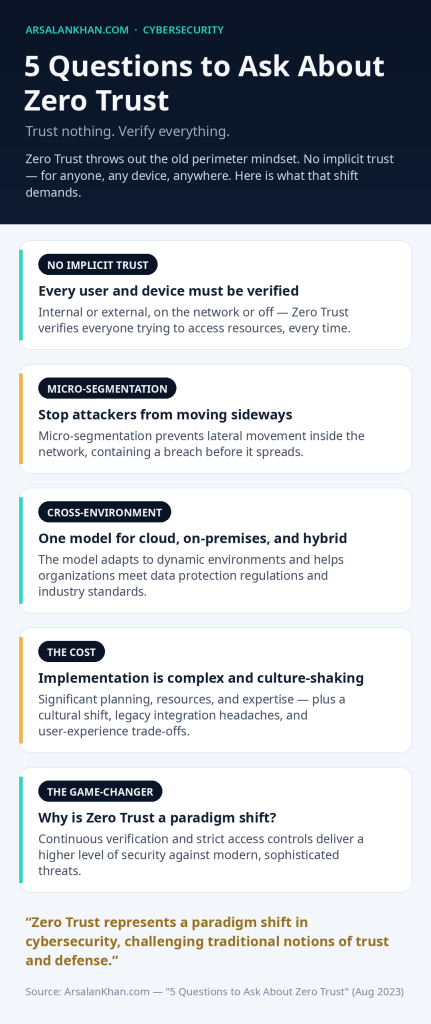
    Infographic: 5 Questions to Ask About Zero Trust
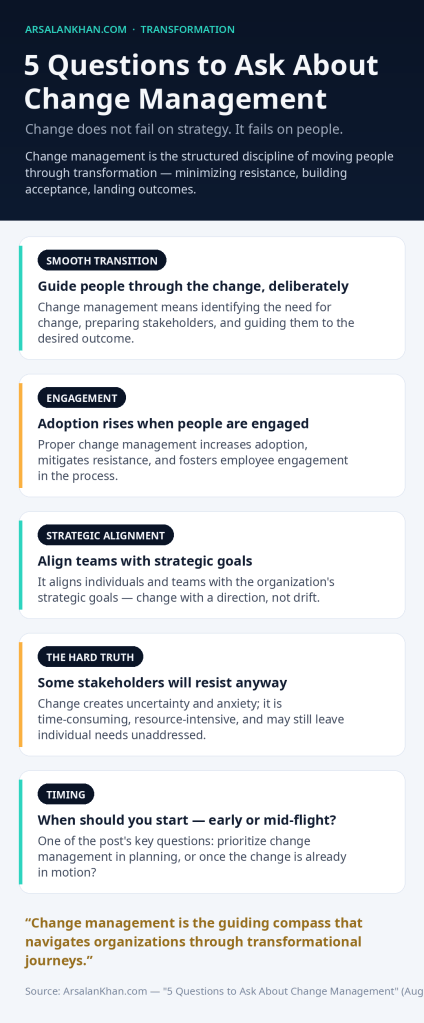
  • 5 Questions to Ask About Change Management

    Change management is a structured approach that enables organizations to navigate the complexities of transformational initiatives successfully. It involves planning, implementing, and guiding individuals and teams through the process of organizational change. Change management aims to minimize resistance, foster acceptance, and ensure the desired outcomes are achieved. This post explores the background of change management, presenting its advantages, challenges, and thought-provoking questions that intrigue leaders and change agents.

    Understanding Change Management

    Change management involves identifying the need for change, preparing for it, and guiding stakeholders through the process to achieve the desired outcomes. It encompasses communication, training, and addressing resistance to ensure successful change adoption.

    The Pros of Change Management

    1. Smooth Transition: Change management ensures a smooth transition during times of significant organizational change.
    2. Increased Adoption: Proper change management increases the likelihood of successful change adoption by stakeholders.
    3. Mitigated Resistance: It addresses resistance to change, reducing disruptions and promoting cooperation.
    4. Employee Engagement: Change management fosters employee engagement and involvement in the change process.
    5. Better Alignment: Change management aligns individuals and teams with the organization’s strategic goals.

    The Cons of Change Management

    1. Time-Consuming: Implementing change management can be time-consuming, especially in large-scale initiatives.
    2. Resource Intensive: Change management requires significant resources, including training and communication efforts.
    3. Uncertainty: Change can create uncertainty and anxiety among employees, impacting morale and productivity.
    4. Resistance: Despite change management efforts, some stakeholders may still resist the change.
    5. Overlooking Individual Needs: Change management may not fully address the individual needs of all stakeholders.

    Intriguing Questions about Change Management

    1. What: What are the key change management methodologies, and how do they differ in their approach to change?
    2. Who: Who are the key individuals or teams responsible for leading change management initiatives within organizations?
    3. Where: Where do we see the most significant impact of change management – in organizational restructuring, technological advancements, or cultural transformations?
    4. When: When should organizations prioritize change management efforts – during the early planning stages or when the change is already in motion?
    5. Why: Why is change management considered crucial for organizational success, and how can it lead to a competitive advantage?

    Conclusion

    Change management is the guiding compass that navigates organizations through transformational journeys. By addressing resistance, fostering engagement, and aligning stakeholders with the change, organizations can achieve successful outcomes. While change management may present challenges, investing in a structured approach will pave the way for a resilient, adaptive, and forward-thinking organization that embraces change as an opportunity for growth and innovation. Embracing change management will lead to a culture that thrives on continuous improvement and seizes the possibilities of a dynamic business landscape.

    Infographic: 5 Questions to Ask About Change Management
  • 5 Questions to Ask About Data Breaches

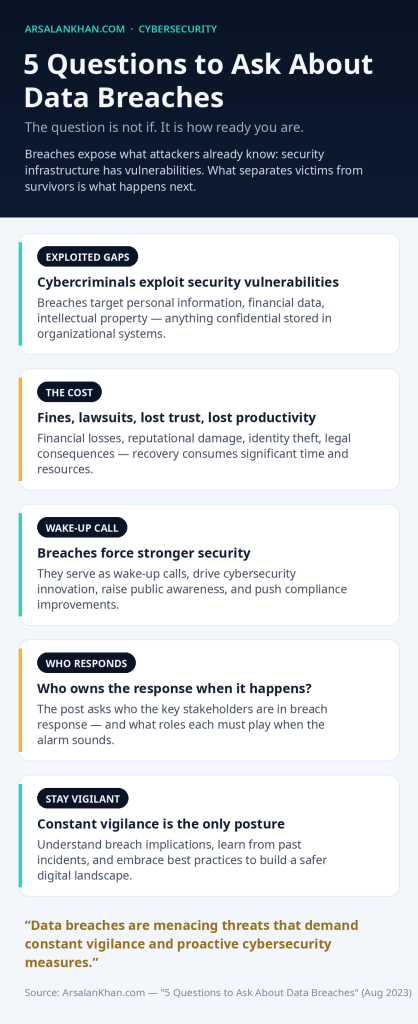
    Data breaches are incidents where unauthorized individuals gain access to sensitive or confidential information stored within an organization’s systems. Such breaches pose significant threats to data security and privacy, leading to potential financial losses, reputational damage, and legal consequences. This post explores the background of data breaches, presenting their implications, advantages, and challenges that intrigue both businesses and individuals.

    Understanding Data Breaches

    Data breaches occur when cybercriminals exploit vulnerabilities in an organization’s security infrastructure to access sensitive data. These breaches can involve personal information, financial data, intellectual property, or other confidential records.

    The Pros of Data Breaches

    1. Alerting Organizations: Data breaches serve as wake-up calls for organizations to strengthen their security measures.
    2. Cybersecurity Innovation: Breaches drive innovation in cybersecurity technologies and practices.
    3. Public Awareness: Data breaches raise public awareness about the importance of data privacy.
    4. Regulatory Compliance: Breaches prompt organizations to review and improve their compliance with data protection regulations.
    5. Learning Opportunities: Organizations can learn from data breaches to prevent similar incidents in the future.

    The Cons of Data Breaches

    1. Financial Losses: Data breaches can lead to financial losses due to legal fines, customer compensation, and business disruption.
    2. Reputational Damage: Breaches damage an organization’s reputation, leading to loss of trust from customers and stakeholders.
    3. Identity Theft and Fraud: Breached data can be used for identity theft and fraudulent activities.
    4. Legal Consequences: Organizations may face legal actions and lawsuits from affected parties.
    5. Lost Productivity: Data breaches require significant resources and time to recover and investigate.

    Intriguing Questions about Data Breaches

    1. What: What are the common methods used by cybercriminals to execute data breaches, and how can organizations protect against them?
    2. Who: Who are the key stakeholders involved in responding to data breaches within organizations, and what roles do they play?
    3. Where: Where do we see the most significant impact of data breaches – in large corporations, small businesses, or government entities?
    4. When: When do data breaches most commonly occur – during specific times of the year or in response to certain events?
    5. Why: Why are data breaches considered a significant threat in the digital age, and what steps can individuals take to protect their data?

    Conclusion

    Data breaches are menacing threats that demand constant vigilance and proactive cybersecurity measures. By understanding the implications of breaches and learning from past incidents, organizations can bolster their data security practices and protect their valuable assets. While data breaches have serious consequences, embracing cybersecurity best practices and complying with data protection regulations will pave the way for a safer digital landscape where data is shielded from malicious intent.

    Infographic: 5 Questions to Ask About Data Breaches
  • 5 Questions to Ask About Data-Based Decision-Making

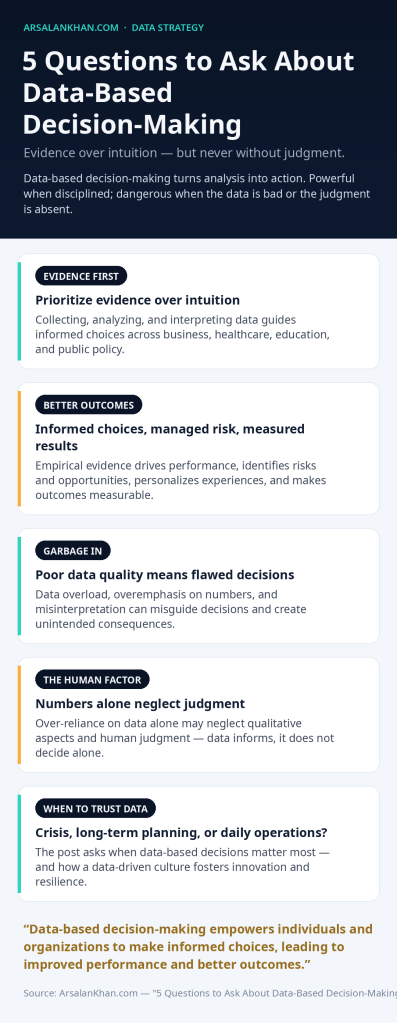
    Data-based decision-making is a strategic approach that relies on data analysis and insights to guide informed choices and actions. In the digital era, organizations and individuals have access to vast amounts of data, which, when properly analyzed, can provide valuable insights and drive better decision-making. This post explores the significance of data-based decision-making, its advantages, challenges, and thought-provoking questions that intrigue businesses and individuals seeking to harness the power of data.

    Understanding Data-Based Decision-Making

    Data-based decision-making involves collecting, analyzing, and interpreting data to make informed choices. It is applicable across various domains, including business, healthcare, education, and public policy. This approach prioritizes evidence over intuition, fostering a culture of data-driven insights.

    The Pros of Data-Based Decision-Making

    1. Informed Choices: Data-based decision-making ensures choices are supported by empirical evidence and insights.
    2. Improved Performance: Data-driven strategies can lead to improved performance and optimized processes.
    3. Risk Mitigation: Analyzing data helps identify potential risks and opportunities, leading to better risk management.
    4. Personalization: Data insights enable personalized experiences for customers and users.
    5. Measurable Outcomes: Data-driven decisions facilitate tracking and measurement of outcomes.

    The Cons of Data-Based Decision-Making

    1. Data Quality: Poor data quality can lead to erroneous conclusions and flawed decision-making.
    2. Data Overload: Dealing with large volumes of data can be overwhelming without proper tools and expertise.
    3. Overemphasis on Numbers: Over-reliance on data alone may neglect qualitative aspects and human judgment.
    4. Time and Resources: Analyzing data and deriving insights may require significant time and resources.
    5. Misinterpretation: Misinterpreting data can lead to misguided decisions and unintended consequences.

    Intriguing Questions about Data-Based Decision-Making

    1. Who: Who are the key stakeholders involved in data analysis and decision-making within organizations, and how can they collaborate effectively?
    2. What: What are some real-life examples of successful data-based decision-making that had a significant impact on organizations or industries?
    3. Where: Where do we see the most significant impact of data-based decision-making – in business strategy, healthcare outcomes, or public policy?
    4. When: When is the most opportune time to rely on data-based decision-making – during crisis management, long-term planning, or day-to-day operations?
    5. Why: Why is data-based decision-making considered essential for fostering innovation, adaptability, and resilience in a rapidly changing world?

    Conclusion

    Data-based decision-making empowers individuals and organizations to make informed choices, leading to improved performance and better outcomes. By embracing a data-driven approach, businesses can stay ahead in a competitive landscape, and individuals can make more confident choices. While data-based decision-making offers numerous benefits, it requires a commitment to data quality, analysis, and interpretation. Embracing data-driven strategies will pave the way for a future where evidence-based insights drive progress, innovation, and positive impact across diverse domains.

    Infographic: 5 Questions to Ask About Data-Based Decision-Making
  • 5 Questions to Ask About Data Stupidity

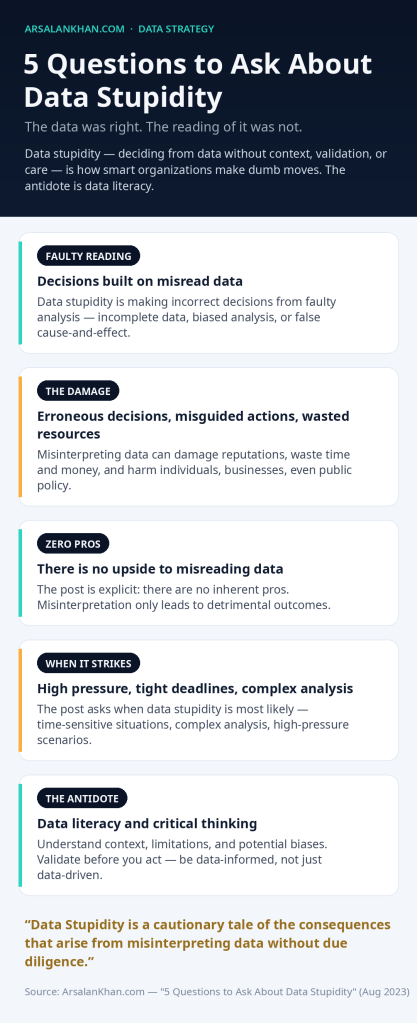
    Data Stupidity, often referred to as “Data Dumbness” or “Data Misinterpretation,” is the act of making incorrect or misguided decisions based on faulty data analysis or misinterpretation of data. In a data-driven world, misinterpreting data can lead to erroneous conclusions and misguided actions, impacting individuals, businesses, and even societies. This post explores the background of data stupidity, presenting its implications, potential advantages, and thought-provoking questions that encourage data literacy and critical thinking.

    Understanding Data Stupidity

    Data Stupidity occurs when individuals or organizations rely on data without proper context, understanding, or validation, leading to flawed decision-making and unintended consequences. It often results from incomplete data, biased analysis, or drawing causal relationships where there are none.

    The Pros of Data Stupidity

    1. None: There are no inherent pros to data stupidity. Misinterpreting data can lead to detrimental outcomes.

    The Cons of Data Stupidity

    1. Erroneous Decisions: Data stupidity can lead to making incorrect or harmful decisions.
    2. Misguided Actions: Misinterpreting data may lead to actions that do not address the actual problems.
    3. Reputation Damage: Relying on erroneous data can damage an individual’s or organization’s reputation.
    4. Wasted Resources: Misguided actions based on data stupidity may lead to the wastage of time, money, and resources.
    5. Negative Impact: Data stupidity can have adverse effects on individuals, businesses, or even public policies.

    Intriguing Questions about Data Stupidity

    1. What: What are some common examples of data stupidity in various domains, and what were the consequences?
    2. Who: Who are the key individuals responsible for data analysis and decision-making, and how can they avoid data stupidity?
    3. Where: Where do we see the most significant impact of data stupidity – in business analytics, scientific research, or public policymaking?
    4. When: When is data stupidity most likely to occur – during time-sensitive situations, complex data analysis, or in response to high-pressure scenarios?
    5. Why: Why is data literacy and critical thinking essential in combating data stupidity, and how can individuals and organizations enhance these skills?

    Conclusion

    Data Stupidity is a cautionary tale of the consequences that arise from misinterpreting data without due diligence. Embracing data literacy, critical thinking, and validation practices are vital for responsible decision-making and avoiding misguided actions. In a data-driven world, understanding the context, limitations, and potential biases of data is paramount. By being vigilant and adopting data-informed decision-making, individuals and organizations can harness the power of data to drive positive impact and make meaningful contributions to society.

    Infographic: 5 Questions to Ask About Data Stupidity