Category: Business Improvement and Transformation

Business Improvement and Transformation

  • 5 Questions to Ask About Software Maintenance

    Software Maintenance is a crucial aspect of the software development lifecycle that ensures the continuous health, performance, and relevance of software products. From bug fixes and updates to accommodating changing requirements, software maintenance plays a pivotal role in sustaining digital innovation. This post explores the significance of software maintenance, presenting its benefits, challenges, and thought-provoking questions that arise in this ever-evolving domain.

    Understanding Software Maintenance

    Software Maintenance refers to the process of enhancing, modifying, and updating software products to meet evolving user needs, improve performance, and address issues that emerge during the software’s lifecycle. It involves various activities, including bug fixing, patching, software updates, and compliance with new industry standards.

    The Pros of Software Maintenance

    1. Enhanced Performance and Stability: Software maintenance optimizes the performance and stability of applications, ensuring smooth operations and improved user experiences.
    2. Extended Product Lifespan: Regular maintenance extends the lifespan of software products, maximizing the return on investment for organizations.
    3. Adaptation to Changing Requirements: Maintenance enables software to accommodate changing business needs, keeping it relevant and up-to-date.
    4. Security Updates: Maintenance includes timely security updates, protecting software from potential vulnerabilities and cyber threats.
    5. Customer Satisfaction: Well-maintained software provides a positive user experience, increasing customer satisfaction and loyalty.

    The Cons of Software Maintenance

    1. Resource Intensive: Extensive maintenance efforts may require significant time, personnel, and financial resources.
    2. Complexity with Legacy Systems: Maintaining legacy systems can be challenging due to outdated technologies and lack of documentation.
    3. Interruption to Operations: Implementing maintenance updates may cause temporary disruptions to operations.
    4. Risk of Regression: While fixing one issue, maintenance updates may inadvertently introduce new bugs or regressions.
    5. Alignment with New Technologies: Integrating new technologies in maintenance may require careful planning and testing.

    Intriguing Questions about Software Maintenance

    1. What: What are the different types of software maintenance, and how do they address varying aspects of software upkeep?
    2. Who: Who are the key stakeholders involved in software maintenance, and what roles do they play in ensuring successful updates?
    3. Where: Where do we see the most significant impact of software maintenance – in mission-critical systems, consumer applications, or other domains?
    4. When: When should organizations prioritize software maintenance – immediately after deployment, periodically, or based on specific triggers?
    5. Why: Why is software maintenance considered an ongoing process rather than a one-time activity, and how does it contribute to the overall software development lifecycle?

    Conclusion

    Software Maintenance is an indispensable component of software development that breathes life into applications long after their initial deployment. Embracing proactive maintenance practices ensures that software remains relevant, secure, and high-performing in an ever-changing digital landscape. While it presents challenges, the benefits of software maintenance far outweigh the costs, enabling organizations to deliver sustainable and innovative software solutions that cater to the evolving needs of users.
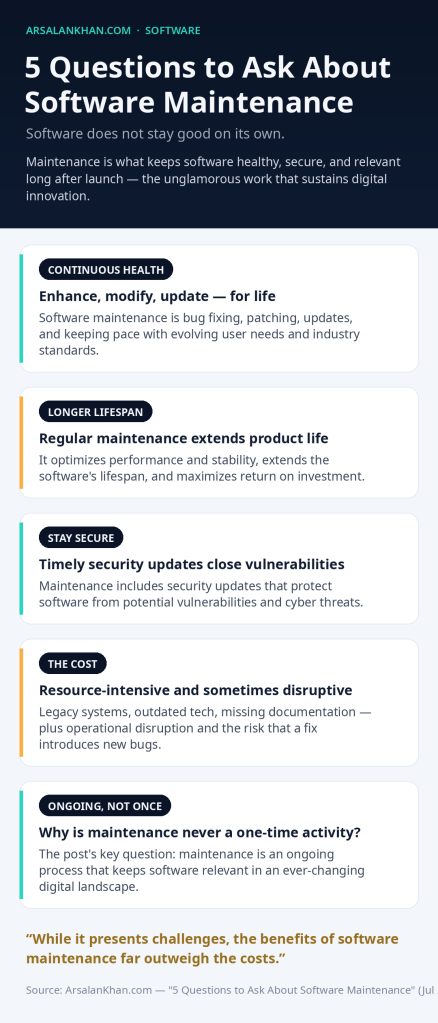
    Infographic: 5 Questions to Ask About Software Maintenance
  • 5 Questions to Ask About Software Deployment

    Software Deployment is the critical process of releasing software applications from development environments to production environments, making them available for end-users. It is a pivotal stage in the software development lifecycle, shaping how technology reaches and impacts the world. This post sheds light on the significance of software deployment, presenting its advantages, challenges, and thought-provoking questions that intrigue technologists and businesses alike.

    Understanding Software Deployment

    Software Deployment involves the smooth transition of software applications from testing and development environments to live production systems. It encompasses activities like installation, configuration, and activation of the software on targeted platforms, ensuring that end-users can access and utilize the application effectively.

    The Pros of Software Deployment

    1. Efficiency and Speed: Automated deployment processes facilitate rapid and efficient software delivery, reducing time-to-market.
    2. Consistency: Standardized deployment procedures ensure consistent configurations across different environments, reducing the risk of discrepancies.
    3. Minimized Downtime: Seamless deployments minimize service disruptions, allowing continuous availability of software for end-users.
    4. Scalability: Efficient deployment practices support the easy scaling of software to meet increasing user demands.
    5. Continuous Integration: Integration with continuous integration and continuous deployment (CI/CD) pipelines streamlines the development-to-deployment cycle.

    The Cons of Software Deployment

    1. Complexity: Complex software deployments may require extensive planning and testing to avoid potential issues.
    2. Downtime Risk: Poorly executed deployments can lead to downtime and disrupt business operations.
    3. Data Migration: Data migration during deployment can be challenging, requiring careful handling of sensitive information.
    4. Rollback Challenges: Reverting to previous versions during faulty deployments may be complex and time-consuming.
    5. Dependency on Infrastructure: Deployment may be influenced by the stability and reliability of underlying infrastructure.

    Intriguing Questions about Software Deployment

    1. What: What are the key deployment strategies and methodologies, and how do they cater to the unique needs of different software applications?
    2. Who: Who are the key stakeholders involved in software deployment, and what roles do they play in ensuring successful rollouts?
    3. Where: Where do we witness the most significant impact of software deployment – in consumer applications, enterprise solutions, or critical systems?
    4. When: When should organizations prioritize software deployment – during specific release cycles, in response to user demand, or based on industry trends?
    5. Why: Why is automated deployment considered essential in modern software development, and what benefits does it offer compared to manual deployment?

    Conclusion

    Software Deployment marks the culmination of arduous development efforts, as technology ventures into the hands of users. By adopting efficient deployment practices, organizations can achieve rapid and consistent delivery of software while mitigating potential risks. However, it is crucial to remain vigilant and responsive to challenges that may arise during deployment, as a seamless rollout can significantly impact user experiences and overall business success. Embracing innovation and automation in the deployment process will pave the way for unleashing the true potential of technology to the world.

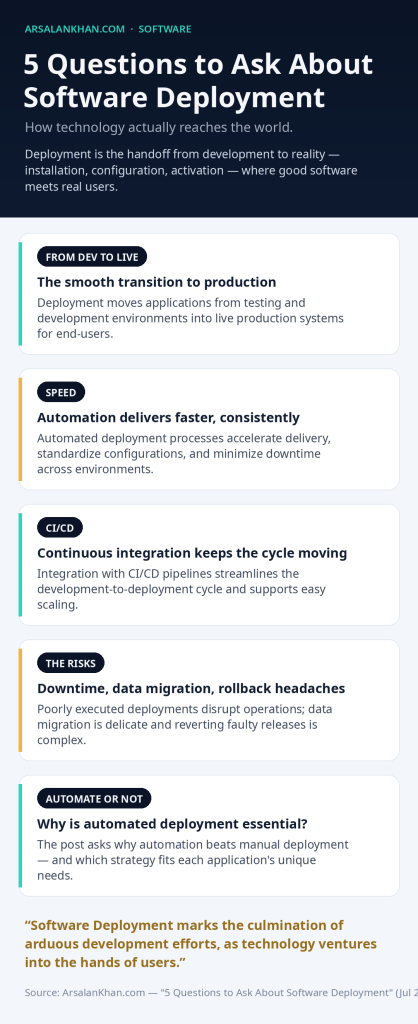
    Infographic: 5 Questions to Ask About Software Deployment
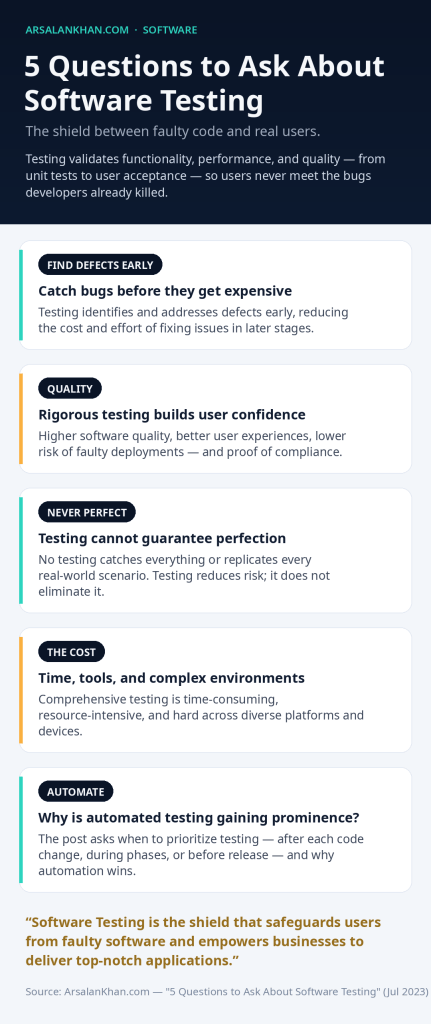
  • 5 Questions to Ask About Software Testing

    Software Testing is a critical process in the software development lifecycle that validates and verifies the functionality, performance, and quality of software applications. From detecting defects to ensuring seamless user experiences, software testing plays a pivotal role in delivering reliable and high-performing software solutions. This post delves into the significance of software testing, presenting its advantages, challenges, and thought-provoking questions that intrigue both developers and users.

    Understanding Software Testing

    Software Testing is a systematic and methodical evaluation of software applications to identify and rectify defects, ensuring that the software meets specified requirements and delivers optimal performance. It involves various testing techniques and methodologies, ranging from unit testing to user acceptance testing.

    The Pros of Software Testing

    1. Defect Detection: Software testing identifies and addresses defects early in the development process, reducing the cost and effort of fixing issues in later stages.
    2. Enhanced Software Quality: Rigorous testing leads to higher software quality, boosting user satisfaction and confidence.
    3. Improved User Experience: Testing ensures that software meets user expectations, providing a seamless and satisfying user experience.
    4. Risk Mitigation: Software testing mitigates the risk of deploying faulty applications, safeguarding businesses from potential losses.
    5. Compliance and Validation: Testing ensures that software adheres to industry standards, regulations, and specified requirements.

    The Cons of Software Testing

    1. Time-Consuming: Comprehensive testing can be time-consuming, potentially delaying project timelines.
    2. Resource Intensive: Testing may require dedicated personnel and tools, adding to project costs.
    3. Cannot Guarantee Perfection: While testing aims to catch defects, it cannot guarantee that all issues will be identified or eliminated.
    4. Complexity of Testing Environments: Testing across diverse platforms and devices can be challenging due to the complexities of the software ecosystem.
    5. Testing Limitations: Testing may not be able to replicate all real-world scenarios, leading to potential issues in live environments.

    Intriguing Questions about Software Testing

    1. What: What are the different levels of software testing, and how do they contribute to ensuring software quality?
    2. Who: Who are the key stakeholders involved in software testing, and what roles do they play in the testing process?
    3. Where: Where do we see the most significant impact of software testing – in consumer applications, critical systems, or emerging technologies?
    4. When: When should organizations prioritize software testing – during specific development phases, after each code change, or before the final release?
    5. Why: Why is automated testing gaining prominence in software development, and how does it improve the efficiency and effectiveness of testing processes?

    Conclusion

    Software Testing is the shield that safeguards users from faulty software and empowers businesses to deliver top-notch applications. By adopting comprehensive testing practices, organizations can ensure the reliability, performance, and functionality of their software products. While testing may present challenges, the benefits of delivering high-quality software to satisfied users far outweigh the efforts invested. Embracing continuous testing and innovation will pave the way for excellence in the digital realm, fostering a world where technology meets the highest standards of quality and efficiency.

    Infographic: 5 Questions to Ask About Software Testing
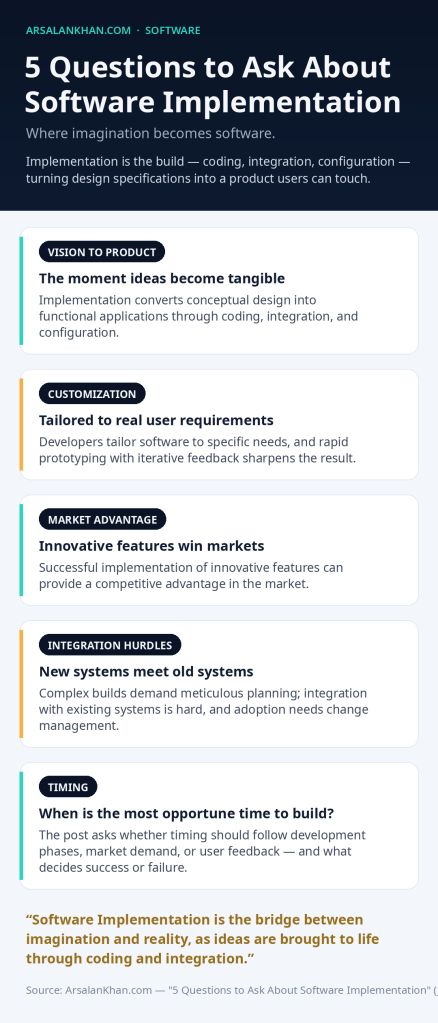
  • 5 Questions to Ask About Software Implementation

    Software Implementation is the transformative process of converting a conceptual software design into a tangible and functional application. It involves a series of steps, including coding, integration, and configuration, to bring the software to life. Software implementation is a pivotal stage in the software development journey, breathing life into innovative ideas and making technology accessible to users. This post explores the significance of software implementation, presenting its benefits, challenges, and thought-provoking questions that intrigue both developers and end-users.

    Understanding Software Implementation

    Software Implementation is the actual construction of software based on the specifications and requirements gathered during the design phase. It encompasses writing code, integrating modules, configuring settings, and preparing the software for deployment.

    The Pros of Software Implementation

    1. Realization of Vision: Software implementation is the moment when a concept is transformed into a tangible product, bringing ideas to life.
    2. Functional Product: Implementation delivers a fully functional software application that users can interact with and benefit from.
    3. Customization: Developers can tailor the software to meet specific user requirements, providing personalized solutions.
    4. Rapid Prototyping: Implementation allows for rapid prototyping and iterative development, facilitating quick feedback and improvements.
    5. Innovation and Market Advantage: Successful implementation of innovative features can provide a competitive advantage in the market.

    The Cons of Software Implementation

    1. Complexity and Challenges: Implementing complex software can be challenging, requiring meticulous planning and execution.
    2. Resource Intensive: Implementation may require substantial time, effort, and resources, impacting project timelines and budgets.
    3. Potential Bugs and Issues: Software implementation may introduce new bugs and issues that need to be addressed in subsequent phases.
    4. Integration Hurdles: Integrating new software with existing systems can be complex and may require additional modifications.
    5. User Adoption: User acceptance and adoption of the implemented software may vary, requiring change management efforts.

    Intriguing Questions about Software Implementation

    1. What: What are the key software development methodologies used in implementation, and how do they influence the development process?
    2. Who: Who are the key players involved in software implementation, and what roles do they play in the implementation process?
    3. Where: Where do we see the most significant impact of software implementation – in consumer applications, enterprise systems, or specialized domains?
    4. When: When is the most opportune time to implement software – during specific phases of development, in response to market demands, or based on user feedback?
    5. Why: Why is software implementation considered a critical phase in the software development lifecycle, and what factors influence its success or failure?

    Conclusion

    Software Implementation is the bridge between imagination and reality, as ideas are brought to life through coding and integration. By undertaking software implementation with precision and dedication, developers can craft functional and innovative applications that resonate with users. While challenges may arise during implementation, the benefits of delivering user-friendly and efficient software far outweigh the obstacles faced. Embracing collaborative development and continuous improvement will pave the way for software implementations that redefine technology and drive positive change in the digital landscape.

    Infographic: 5 Questions to Ask About Software Implementation
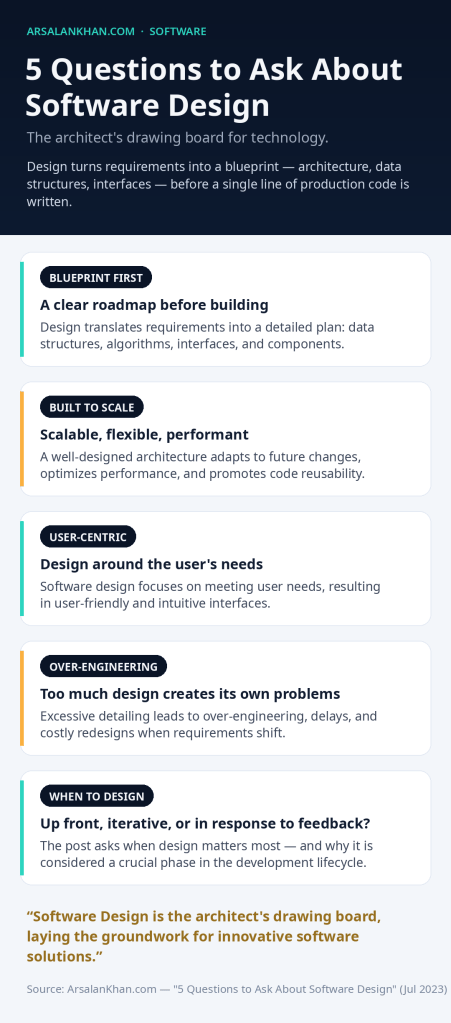
  • 5 Questions to Ask About Software Design

    Software Design is the creative and systematic process of defining the architecture, structure, and functionalities of a software application. It lays the foundation for turning ideas into reality and is a crucial phase in the software development lifecycle. Software design shapes how technology will interact with users and how it will fulfill their needs. This post delves into the significance of software design, presenting its advantages, challenges, and thought-provoking questions that intrigue developers and users alike.

    Understanding Software Design

    Software Design involves translating requirements and specifications into a detailed plan for building the software. It encompasses defining data structures, algorithms, interfaces, and other components required for the application.

    The Pros of Software Design

    1. Clarity and Coherence: Software design ensures a clear and coherent roadmap for building the application, minimizing ambiguities and misunderstandings.
    2. Scalability and Flexibility: A well-designed software architecture allows for scalability and easy adaptation to future changes or enhancements.
    3. Optimized Performance: Thoughtful design decisions lead to optimized performance, ensuring efficient utilization of resources.
    4. Code Reusability: Modular and well-structured design promotes code reusability, speeding up development and reducing redundancy.
    5. User-Centric Solutions: Software design focuses on meeting user needs, resulting in user-friendly and intuitive interfaces.

    The Cons of Software Design

    1. Time-Consuming: Elaborate software design can be time-consuming, potentially delaying the development process.
    2. Over-Engineering: Excessive detailing in design may lead to over-engineering, increasing development complexities.
    3. Potential Misalignment: Misalignment between design and user requirements can lead to costly redesigns and rework.
    4. Dynamic Nature of Requirements: Changing requirements may challenge the stability of the initial design.
    5. Lack of Creativity: Strict adherence to design specifications may limit creative problem-solving during development.

    Intriguing Questions about Software Design

    1. What: What are the key software design principles and patterns, and how do they influence the quality of software solutions?
    2. Who: Who are the key stakeholders involved in software design, and how do they contribute to shaping the final product?
    3. Where: Where do we see the most significant impact of software design – in consumer applications, critical systems, or emerging technologies?
    4. When: When should organizations prioritize software design – in the initial stages of development, before coding, or in response to user feedback?
    5. Why: Why is software design considered a crucial phase in the software development lifecycle, and how does it influence the overall success of the application?

    Conclusion

    Software Design is the architect’s drawing board, laying the groundwork for innovative software solutions. By investing in thoughtful and user-centric design, developers can craft applications that meet user expectations and drive user adoption. While design may present challenges, the benefits of a well-structured and scalable architecture far outweigh the efforts invested. Embracing agile design practices and fostering collaboration between developers and stakeholders will pave the way for software designs that redefine technology and create impactful user experiences.

    Infographic: 5 Questions to Ask About Software Design