Author: Khan

  • 5 Questions to Ask About Your Business Process Automation (BPA)

    Business Process Automation (BPA) is a strategic approach that utilizes technology to automate and optimize repetitive, manual, and rule-based tasks within an organization. By automating these processes, businesses can increase efficiency, reduce human errors, and focus on higher-value tasks. This post delves into the significance of Business Process Automation, presenting its advantages, challenges, and thought-provoking questions that intrigue forward-thinking organizations.

    Understanding Business Process Automation

    Business Process Automation involves the use of software and technology to automate routine tasks and workflows, enhancing productivity and reducing operational costs. It can range from simple automation, such as email notifications, to complex workflow systems that span across departments.

    The Pros of Business Process Automation

    1. Increased Efficiency: Automation eliminates manual tasks, leading to faster and more streamlined processes.
    2. Reduced Errors: BPA reduces human errors and ensures consistent, accurate results.
    3. Cost Savings: Automation can lead to significant cost savings by reducing the need for manual labor.
    4. Improved Compliance: Automated processes can ensure adherence to industry regulations and compliance standards.
    5. Enhanced Scalability: Automated systems can scale easily to handle increased workloads and demands.

    The Cons of Business Process Automation

    1. Implementation Complexity: Integrating automation into existing processes can be complex and time-consuming.
    2. Initial Investment: Setting up automation systems may require a significant upfront investment.
    3. Lack of Flexibility: Over-automation can limit the ability to adapt quickly to changing business needs.
    4. Dependency on Technology: Technical glitches or system failures can disrupt operations if not handled promptly.
    5. Impact on Workforce: Automation may lead to workforce changes, requiring reskilling and reorganization.

    Intriguing Questions about Business Process Automation

    1. What: What are the key business processes that can benefit the most from automation, and how can they be identified?
    2. Who: Who are the key stakeholders involved in the decision-making process of implementing business process automation?
    3. Where: Where do we see the most significant impact of business process automation – in small businesses, large enterprises, or specific industries?
    4. When: When is the right time for organizations to embrace business process automation, and how can they start the journey?
    5. Why: Why has business process automation become essential for modern businesses, and what challenges does it address in today’s dynamic market?

    Conclusion

    Business Process Automation is the catalyst that drives organizations towards enhanced efficiency and productivity. By leveraging technology to automate routine tasks, businesses can achieve cost savings, accuracy, and scalability. While implementing business process automation may present challenges, the benefits of streamlining operations and empowering the workforce far outweigh the initial investment. Embracing automation will pave the way for agile and competitive businesses that can adapt to the ever-evolving demands of the market.
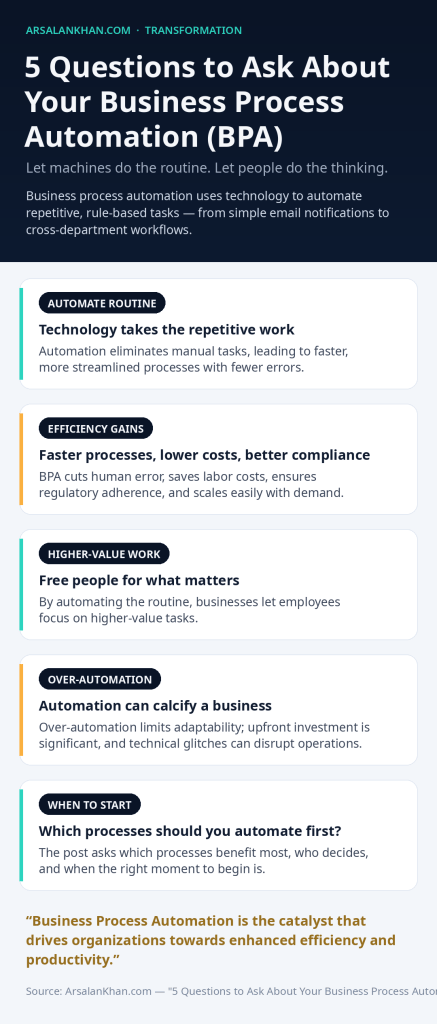
    Infographic: 5 Questions to Ask About Your Business Process Automation (BPA)
  • 5 Questions to Ask About Your Business Process Outsourcing (BPO)

    Business Process Outsourcing (BPO) is a strategic business practice where organizations delegate specific non-core business functions to external service providers. It allows companies to focus on their core competencies while gaining access to specialized skills and resources. This post explores the significance of Business Process Outsourcing, presenting its advantages, challenges, and thought-provoking questions that intrigue businesses seeking enhanced efficiency and cost-effectiveness.

    Understanding Business Process Outsourcing

    Business Process Outsourcing involves contracting external service providers to handle various business functions, such as customer support, payroll processing, data entry, and more. BPO can be onshore, nearshore, or offshore, depending on the location of the service provider.

    The Pros of Business Process Outsourcing

    1. Cost Savings: BPO enables access to cost-effective resources and labor, leading to significant cost savings for businesses.
    2. Focus on Core Competencies: Outsourcing non-core functions allows companies to focus on their core business activities and strategic initiatives.
    3. Access to Specialized Skills: BPO provides access to skilled professionals and resources that may not be available in-house.
    4. Scalability and Flexibility: Outsourcing allows businesses to scale operations up or down based on changing requirements.
    5. Global Presence: BPO facilitates a global presence and enables businesses to cater to diverse markets and time zones.

    The Cons of Business Process Outsourcing

    1. Communication Challenges: Managing communication and collaboration with external teams can be challenging due to geographical and cultural differences.
    2. Data Security Concerns: Entrusting sensitive data to third-party providers may raise data security and confidentiality concerns.
    3. Quality Control: Ensuring consistent quality and adherence to company standards may require careful monitoring and oversight.
    4. Dependency Risks: Overreliance on external service providers can create dependency risks and impact business continuity.
    5. Lack of Direct Control: Outsourcing certain functions may result in reduced control over critical processes.

    Intriguing Questions about Business Process Outsourcing

    1. What: What are the key business processes commonly outsourced, and how does it impact overall organizational efficiency?
    2. Who: Who are the major players in the Business Process Outsourcing industry, and how do businesses choose the right outsourcing partner?
    3. Where: Where are the popular destinations for Business Process Outsourcing, and how do regional factors influence the decision to outsource?
    4. When: When is the most opportune time for businesses to consider outsourcing, and how can they assess the feasibility of outsourcing specific processes?
    5. Why: Why do organizations opt for Business Process Outsourcing, and how does it contribute to their long-term growth and success?

    Conclusion

    Business Process Outsourcing is a strategic tool that empowers businesses to optimize operations, gain access to specialized skills, and achieve cost-efficiency. By leveraging external expertise, organizations can focus on their core competencies and stay competitive in a globalized market. While BPO offers numerous benefits, careful consideration of potential challenges is essential to ensure successful outsourcing arrangements. Embracing outsourcing opportunities will pave the way for agile and forward-looking businesses that can adapt to the dynamic demands of the modern business landscape.

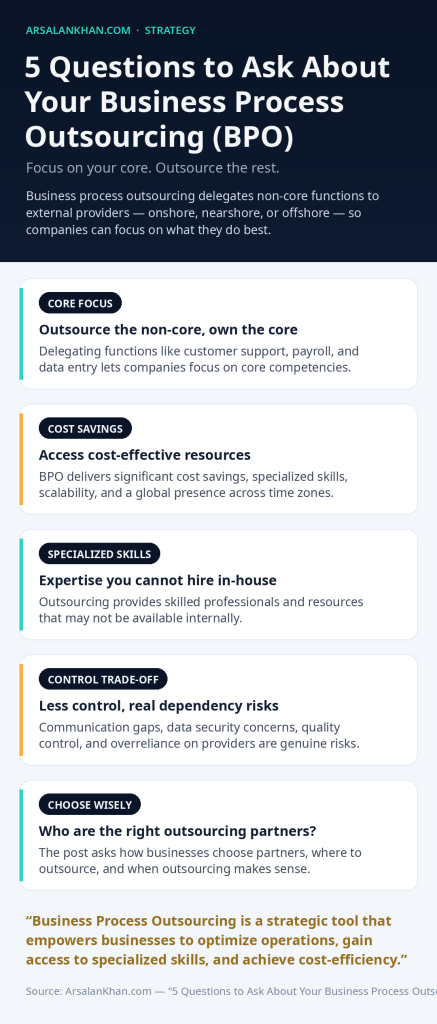
    Infographic: 5 Questions to Ask About Your Business Process Outsourcing (BPO)
  • 5 Questions to Ask About Organizational Design

    Organizational Design is the intentional structuring of an organization’s resources, processes, and roles to achieve strategic goals efficiently. It is a fundamental aspect of business management that influences how work is organized, communication flows, and decisions are made within an organization. This post delves into the significance of Organizational Design, presenting its advantages, challenges, and thought-provoking questions that intrigue business leaders and managers.

    Understanding Organizational Design

    Organizational Design involves designing the structure, systems, and culture of an organization to align with its mission and objectives. It considers factors such as hierarchy, reporting relationships, departmentalization, and workflow to optimize performance.

    The Pros of Organizational Design

    1. Improved Efficiency: Organizational Design streamlines workflows and processes, leading to enhanced efficiency and productivity.
    2. Clear Roles and Responsibilities: It clarifies roles and responsibilities, reducing confusion and conflicts within the organization.
    3. Adaptability: Well-designed organizations are more adaptable to changes in the business environment.
    4. Effective Communication: Organizational Design promotes effective communication and collaboration among employees.
    5. Enhanced Decision Making: A well-designed organizational structure facilitates efficient decision-making processes.

    The Cons of Organizational Design

    1. Resistance to Change: Implementing changes in organizational design may face resistance from employees.
    2. Rigidity: Overly rigid structures can stifle creativity and inhibit responsiveness to dynamic market conditions.
    3. Increased Complexity: Complex organizational designs may lead to bureaucratic processes and slow decision-making.
    4. Silos and Fragmentation: Poorly designed structures can create silos and hinder cross-functional collaboration.
    5. Culture Clash: Changes in organizational design may lead to clashes with existing organizational culture.

    Intriguing Questions about Organizational Design

    1. What: What are the key components of organizational design, and how do they impact the overall performance of the organization?
    2. Who: Who are the key stakeholders involved in the process of organizational design, and what role do they play in shaping the organization?
    3. Where: Where do we see the most significant impact of organizational design – in startups, established corporations, or non-profit organizations?
    4. When: When should organizations consider revisiting their organizational design, and how often should it be updated?
    5. Why: Why is organizational design considered crucial for organizational success, and how does it influence employee motivation and engagement?

    Conclusion

    Organizational Design is the blueprint that shapes the success of an organization, enabling it to achieve its goals efficiently and effectively. By designing structures that foster collaboration, adaptability, and clear communication, organizations can thrive in a dynamic business environment. While organizational design offers numerous benefits, it requires careful consideration and thoughtful implementation to address potential challenges. Embracing strategic organizational design will pave the way for high-performing organizations that are agile, innovative, and well-positioned to achieve long-term success.

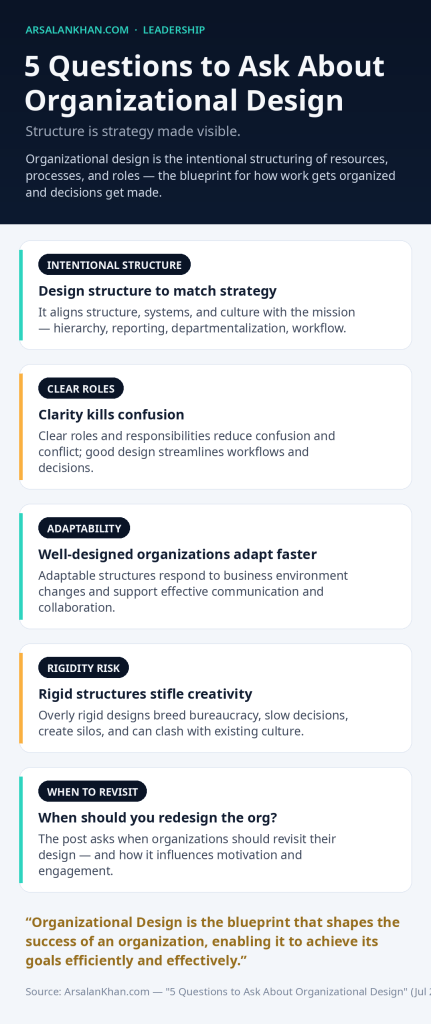
    Infographic: 5 Questions to Ask About Organizational Design
  • 5 Questions to Ask About Your Enterprise Information Management (EIM)

    Enterprise Information Management (EIM) is a comprehensive approach that focuses on managing and leveraging an organization’s information assets to support data-driven decision making and business objectives. EIM encompasses various disciplines, including data governance, data quality management, data integration, and data analytics. This post explores the significance of Enterprise Information Management, presenting its advantages, challenges, and thought-provoking questions that intrigue data-driven organizations.

    Understanding Enterprise Information Management

    Enterprise Information Management involves the systematic management of data and information across an organization’s entire lifecycle. It aims to ensure data accuracy, consistency, accessibility, and security, enabling organizations to harness the power of data for strategic insights.

    The Pros of Enterprise Information Management

    1. Improved Decision Making: EIM provides timely and accurate information, leading to better-informed decision making.
    2. Enhanced Data Quality: EIM ensures data quality through data cleansing, validation, and enrichment.
    3. Operational Efficiency: By streamlining data processes, EIM improves operational efficiency and reduces data-related errors.
    4. Regulatory Compliance: EIM supports compliance with data protection and industry regulations.
    5. Strategic Insights: EIM facilitates data analytics and data mining to gain valuable business insights.

    The Cons of Enterprise Information Management

    1. Complexity: Implementing an EIM strategy can be complex and require significant planning and resources.
    2. Data Silos: Organizational data silos can hinder effective EIM and lead to fragmented data management.
    3. Costs: EIM initiatives may involve substantial investments in technology, training, and data management.
    4. Resistance to Change: Employees may resist adopting new data management practices and technologies.
    5. Data Security Risks: Centralizing data also raises security concerns, requiring robust data protection measures.

    Intriguing Questions about Enterprise Information Management

    1. What: What are the key components of Enterprise Information Management, and how do they contribute to data-driven decision making?
    2. Who: Who are the key stakeholders involved in implementing and driving EIM initiatives within organizations?
    3. Where: Where do we see the most significant impact of Enterprise Information Management – in large enterprises, government agencies, or specific industries?
    4. When: When should organizations prioritize the implementation of Enterprise Information Management, and how does it align with other business strategies?
    5. Why: Why is Enterprise Information Management considered a critical aspect of modern business practices, and how does it foster a data-driven culture?

    Conclusion

    Enterprise Information Management is the key that unlocks the full potential of data, enabling organizations to make informed decisions and gain strategic insights. By implementing EIM strategies and best practices, businesses can enhance data quality, optimize processes, and achieve operational excellence. While EIM offers significant benefits, overcoming challenges and ensuring data security are critical aspects of successful EIM implementations. Embracing Enterprise Information Management will pave the way for data-driven organizations that are agile, innovative, and positioned for sustained growth in the data-centric era.

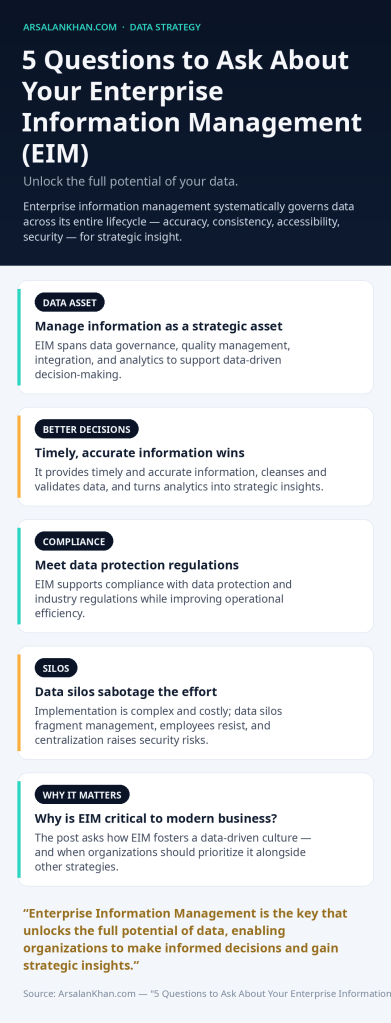
    Infographic: 5 Questions to Ask About Your Enterprise Information Management (EIM)
  • 5 Questions to Ask About Leadership

    Leadership is the art of guiding and influencing individuals or groups towards achieving a common goal. It is a fundamental aspect of successful organizations, shaping the culture, direction, and performance of teams. Leadership is not limited to a specific position; it can be exhibited at all levels within an organization. This post explores the significance of leadership, presenting its advantages, challenges, and thought-provoking questions that intrigue aspiring leaders and individuals seeking to understand its impact.

    Understanding Leadership

    Leadership involves inspiring, motivating, and empowering others to work towards a shared vision. Effective leadership encompasses traits such as vision, empathy, integrity, and adaptability.

    The Pros of Leadership

    1. Inspiration and Vision: Leadership inspires teams with a compelling vision and a sense of purpose.
    2. Decision Making: Effective leaders make informed and timely decisions, guiding the organization through challenges.
    3. Team Building: Leadership fosters a positive team culture, encouraging collaboration and innovation.
    4. Motivation and Engagement: Leaders motivate and engage employees, leading to increased productivity and job satisfaction.
    5. Organizational Success: Strong leadership drives organizational success and sustainable growth.

    The Cons of Leadership

    1. Power Imbalance: Poor leadership may create a power imbalance, leading to disengagement and employee dissatisfaction.
    2. Resistance to Change: Leaders may face resistance when driving organizational change or adopting new strategies.
    3. Ineffective Communication: Poor communication from leaders can lead to misunderstandings and misalignment.
    4. Ethical Concerns: Unethical leadership practices can damage trust and reputation.
    5. Burnout: Overwhelmed leaders may experience burnout, impacting their decision-making abilities.

    Intriguing Questions about Leadership

    1. What: What are the different leadership styles, and how do they impact organizational culture and performance?
    2. Who: Who are the influential leaders that have shaped industries, societies, or historical events?
    3. Where: Where do we see the most significant impact of leadership – in business, politics, sports, or social movements?
    4. When: When is leadership most crucial – during times of crisis, periods of growth, or in maintaining stability?
    5. Why: Why is leadership considered a vital aspect of personal development, and how does it contribute to personal and professional success?

    Conclusion

    Leadership is the guiding force that shapes organizations and drives positive change. By inspiring vision, fostering collaboration, and making informed decisions, leaders can empower teams to achieve remarkable results. While effective leadership offers numerous benefits, addressing challenges and maintaining ethical practices are essential to sustain long-term success. Embracing leadership qualities will pave the way for impactful leaders who lead with integrity, empathy, and resilience, leaving a lasting legacy in the pursuit of excellence.

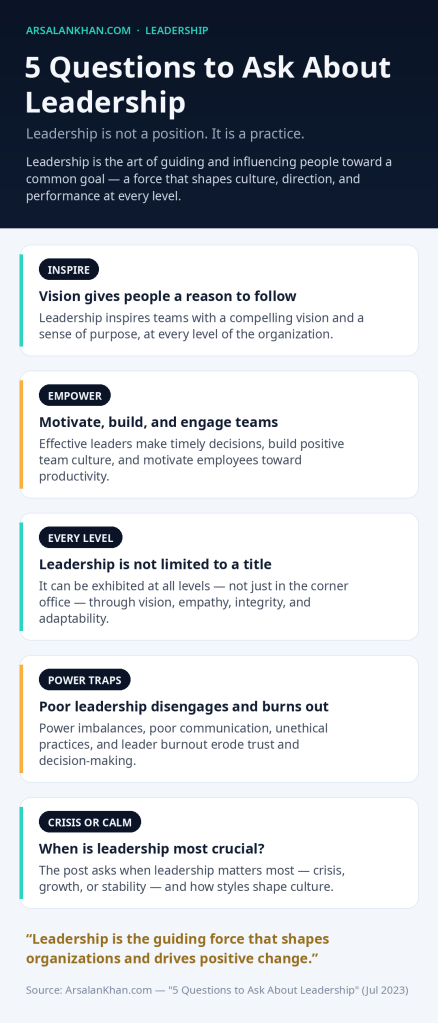
    Infographic: 5 Questions to Ask About Leadership