Author: Khan

  • How to be a Prompt Engineer

    Becoming a prompt engineer involves mastering the art of crafting effective and precise prompts for Artificial Intelligence (AI) language models like GPT-3.5. Here are some steps to help you become a proficient prompt engineer:

    1. Understand the Model: Familiarize yourself with the capabilities and limitations of the specific AI model you’re working with. Read the documentation and guidelines provided by the model’s developers.
    2. Define Clear Objectives: Clearly define the goal or task you want the AI to accomplish. Whether it’s generating text, answering questions, or providing recommendations, a well-defined objective is crucial.
    3. Start Simple: Begin with straightforward prompts and gradually increase complexity as you gain experience. Simple prompts help you understand the model’s behavior and how it interprets input.
    4. Experiment: Explore different prompt styles and formats. Experiment with single-sentence prompts, multi-turn conversations, or context-building techniques like providing background information.
    5. Use Keywords: Incorporate specific keywords or instructions in your prompts to guide the model’s response. Highlight the most important information for better results.
    6. Provide Context: When relevant, provide context or background information in your prompts. This can help the AI generate more accurate and context-aware responses.
    7. Iterative Testing: Test your prompts and fine-tune them based on the AI’s responses. Iterate and adjust as needed to improve the quality of generated content.
    8. Avoid Ambiguity: Avoid vague or ambiguous language in your prompts. Be as precise as possible in your instructions to minimize misinterpretation.
    9. Handle Edge Cases: Consider potential edge cases and unusual inputs. Test your prompts with a variety of scenarios to ensure robust performance.
    10. Ethical Considerations: Be mindful of ethical guidelines and potential biases in AI responses. Avoid prompts that could generate harmful or biased content.
    11. Stay Updated: Stay informed about the latest developments and best practices in prompt engineering, as AI models and guidelines may evolve.
    12. Collaborate: Collaborate with others in the AI community to learn from their experiences and share insights. Online forums and communities can be valuable resources.
    13. Reliance on AI: Don’t use AI-generated content without critical evaluation or fact-checking.

    Remember that becoming a skilled prompt engineer takes time and practice. Continuously refine your skills by experimenting, learning from your mistakes, and keeping up with the latest advancements in AI technology.

    Who can be a Prompt Engineer?

    Anyone with a basic understanding of natural language and the ability to formulate clear and specific instructions can potentially become a prompt engineer. However, to be an effective prompt engineer, it’s helpful to have the following skills and qualifications:

    1. Language Proficiency: A good command of the language(s) you’ll be using to interact with AI models is essential. The ability to communicate clearly and effectively is key to crafting precise prompts.
    2. Critical Thinking: Strong critical thinking skills are necessary to formulate prompts that achieve the desired results. You should be able to analyze problems and determine the most effective way to instruct the AI.
    3. Domain Knowledge: Depending on your specific use case, having domain-specific knowledge can be highly beneficial. It allows you to craft prompts that are contextually relevant and accurate.
    4. Understanding of AI: While you don’t need to be an AI expert, a basic understanding of how AI models work and their limitations can help you generate more effective prompts.
    5. Creativity: Sometimes, crafting prompts requires thinking creatively to guide the AI in generating unique and valuable content.
    6. Adaptability: The ability to adapt and iterate on your prompts based on the AI’s responses is crucial for improving results over time.
    7. Ethical Awareness: Being mindful of ethical considerations and responsible AI usage is essential to ensure that your prompts don’t lead to harmful or biased content.
    8. Problem-Solving Skills: Prompt engineering often involves troubleshooting and refining prompts to achieve desired outcomes, so strong problem-solving skills are valuable.
    9. Collaborative Skills: If you’re working on complex projects, the ability to collaborate with others, such as AI developers or domain experts, can be beneficial.

    While these skills and qualifications can help you excel as a prompt engineer, anyone interested in using AI models responsibly can start by learning and practicing the basics. Many AI platforms provide guidelines and tutorials to help users get started with prompt engineering.
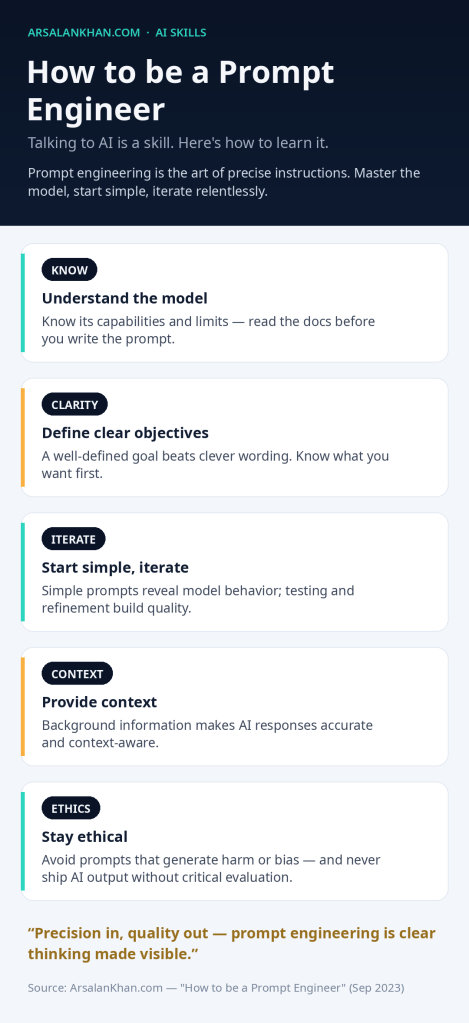
    Infographic: How to be a Prompt Engineer

  • 5 Questions to Ask About Marketing Technology

    Marketing technology, often referred to as “MarTech,” encompasses a wide range of software tools and technologies designed to streamline and optimize marketing activities. In today’s digitally-driven world, marketing technology plays a pivotal role in helping organizations engage with their target audience, analyze customer behavior, and measure the effectiveness of marketing campaigns. From email marketing platforms and social media management tools to customer relationship management (CRM) systems and analytics software, marketing technology empowers marketers to deliver personalized experiences and drive business growth.

    The Pros of Marketing Technology

    1. Personalization and Customer Segmentation: Marketing technology enables marketers to segment their audience and deliver personalized content, leading to higher engagement and conversion rates.
    2. Automation and Efficiency: Marketing automation tools streamline repetitive tasks, saving time and resources for more strategic marketing initiatives.
    3. Data-Driven Decision-Making: With marketing analytics, data-driven insights help marketers measure the performance of campaigns, identify successful strategies, and optimize marketing efforts.
    4. Multichannel Marketing: Marketing technology allows marketers to execute campaigns across various channels like social media, email, web, and mobile, ensuring a cohesive brand experience.
    5. Scalability and Flexibility: As businesses grow, marketing technology can scale to accommodate the expanding marketing needs of the organization.

    The Cons of Marketing Technology

    1. Complexity: Managing multiple marketing technologies can lead to complexity and challenges in integrating different tools.
    2. Data Privacy and Security: Marketing technology often deals with customer data, making data privacy and security crucial concerns.
    3. Learning Curve: Adopting new marketing technologies may require training and a learning curve for marketing teams.
    4. Costs: Investing in marketing technology and ongoing software subscriptions can incur significant costs for businesses.
    5. Overreliance on Technology: Relying solely on marketing technology may lead to the neglect of human creativity and intuition in marketing strategies.

    Intriguing Questions about Marketing Technology

    1. Who: Who are the leading providers and innovators in the marketing technology industry – the companies shaping the future of MarTech?
    2. What: What are the emerging trends in marketing technology, and how are they reshaping marketing strategies?
    3. Where: Where do we see the most significant impact of marketing technology – in industries like e-commerce, B2B marketing, or entertainment?
    4. When: When is the optimal time for organizations to invest in marketing technology – during early-stage marketing efforts or when scaling the business?
    5. Why: Why is marketing technology considered a game-changer for marketers seeking to deliver personalized experiences and drive customer engagement?

    Conclusion

    Marketing technology has revolutionized the way organizations connect with their target audience, analyze data, and execute marketing strategies. By leveraging marketing technology, businesses can harness the power of data-driven insights, automate repetitive tasks, and deliver personalized experiences to customers. Despite challenges in managing complexity and costs, the benefits of marketing automation, data-driven decision-making, and multichannel marketing make marketing technology a valuable asset for modern marketers. By striking the right balance between technology and human creativity, businesses can unlock the full potential of marketing technology and drive growth and success in the ever-evolving digital marketing landscape.

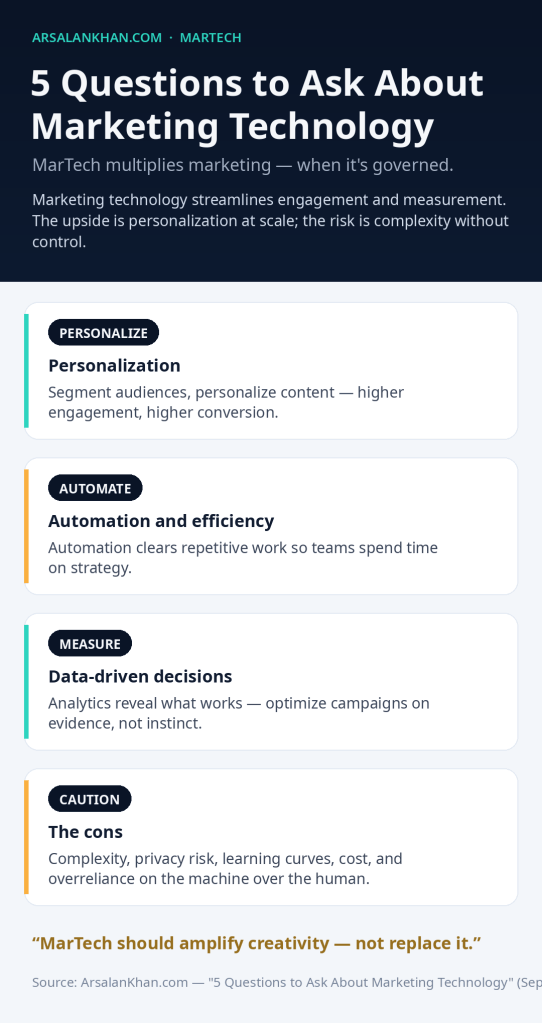
    Infographic: 5 Questions to Ask About Marketing Technology
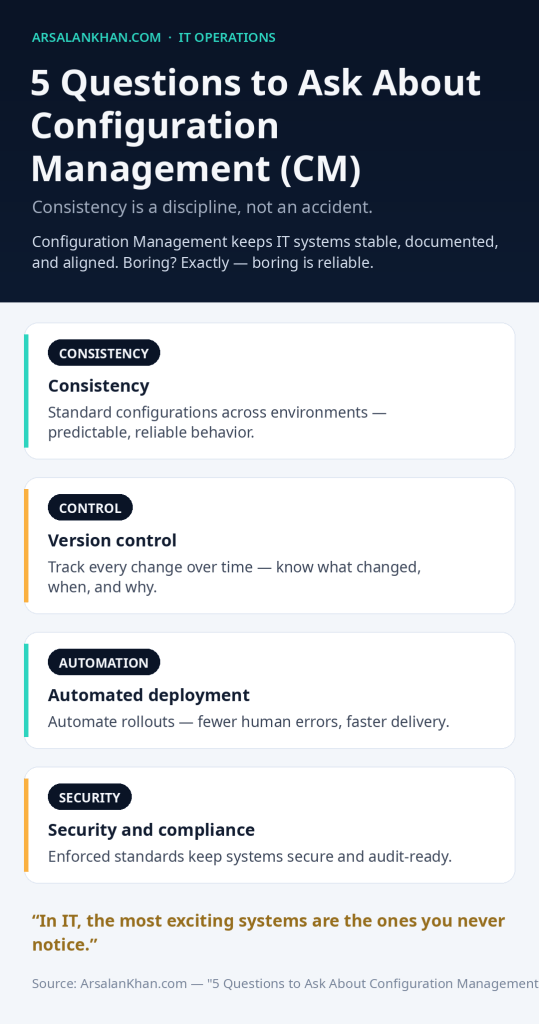
  • 5 Questions to Ask About Configuration Management (CM)

    Configuration Management (CM) is a discipline within IT operations that focuses on maintaining the stability, consistency, and integrity of IT systems and infrastructure. It involves the systematic management of hardware, software, network components, and other resources to ensure that they are correctly configured, documented, and aligned with the organization’s standards and policies. Configuration Management plays a crucial role in supporting efficient IT operations, minimizing downtime, and facilitating successful software development and deployment processes.

    The Pros of Configuration Management

    1. Consistency: Configuration Management ensures that IT systems are configured consistently across different environments, leading to predictable and reliable behavior.
    2. Version Control: CM tools enable version control, allowing IT teams to track and manage changes to configuration settings over time.
    3. Automated Deployment: Configuration Management enables automated deployment of software and infrastructure, reducing human errors and speeding up the deployment process.
    4. Change Tracking: CM tools keep a record of configuration changes, making it easier to identify and address issues caused by recent changes.
    5. Security and Compliance: Configuration Management helps maintain security standards and compliance by ensuring systems adhere to established configurations and policies.

    The Cons of Configuration Management

    1. Learning Curve: Implementing Configuration Management may require training for IT teams to effectively use CM tools and processes.
    2. Complexity: In large and complex IT environments, managing configurations can become challenging and time-consuming.
    3. Overhead: Implementing Configuration Management may introduce some overhead in terms of additional tools, processes, and resources.
    4. Change Management: Ensuring that all changes are properly tracked and managed requires discipline and careful planning.
    5. Integration Challenges: Integrating Configuration Management with existing IT systems and workflows can be complex, especially in legacy environments.

    Intriguing Questions about Configuration Management

    1. Who: Who within an organization is responsible for overseeing Configuration Management processes – IT operations teams, DevOps teams, or dedicated Configuration Managers?
    2. What: What are the essential elements of a robust Configuration Management process, and how do organizations establish and maintain configuration baselines?
    3. Where: Where do we see the most significant impact of Configuration Management – in cloud environments, on-premises infrastructure, or hybrid IT setups?
    4. When: When is the optimal time for organizations to implement Configuration Management – during initial system setup, when scaling IT infrastructure, or during ongoing operations?
    5. Why: Why is Configuration Management considered a critical practice for ensuring IT stability, reducing downtime, and supporting seamless software deployments?

    Conclusion

    Configuration Management is a vital practice for organizations seeking to ensure stability, consistency, and reliability in their IT systems and infrastructure. By implementing CM processes and leveraging CM tools, organizations can automate deployments, track configuration changes, and maintain security and compliance standards. Though challenges such as complexity and integration concerns may arise, the benefits of consistent configurations, automated deployments, and improved IT operations make Configuration Management a valuable investment. By adopting Configuration Management as a core IT discipline, organizations can enhance their overall IT efficiency, reduce downtime, and better support business goals and objectives.

    Infographic: 5 Questions to Ask About Configuration Management (CM)
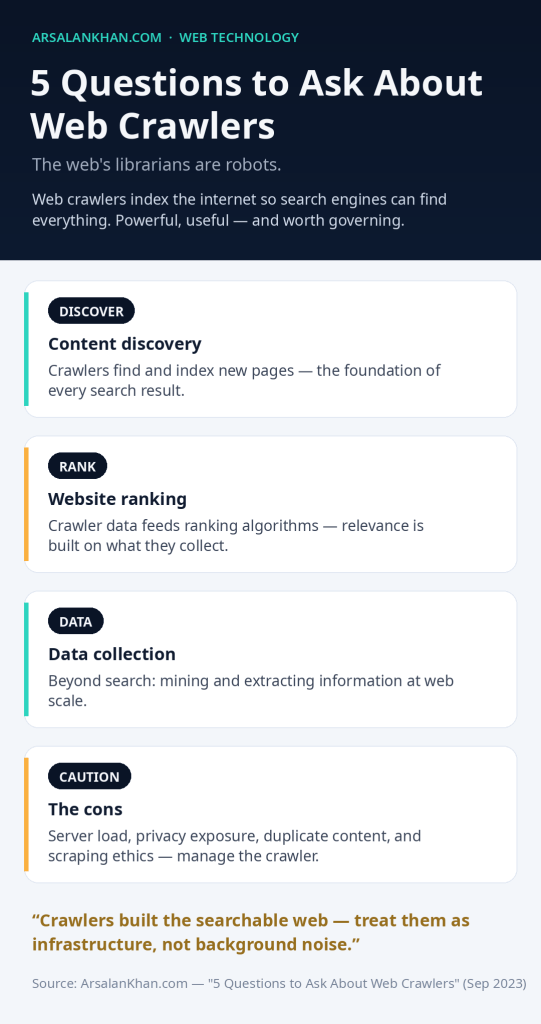
  • 5 Questions to Ask About Web Crawlers

    A web crawler, also known as a spider or web bot, is a program or automated script used by search engines and other applications to navigate and index web pages on the World Wide Web. Web crawlers systematically browse the internet, following links from one web page to another, and collecting information along the way. They play a critical role in helping search engines discover new content, index web pages, and provide relevant search results to users.

    The Pros of Web Crawler

    1. Content Discovery: Web crawlers help discover and index new web pages, making them available for search engine results.
    2. Search Engine Indexing: By collecting information from web pages, web crawlers create a searchable index of the content available on the internet.
    3. Website Ranking: Web crawlers contribute to the ranking algorithms used by search engines to determine the relevance and ranking of web pages in search results.
    4. Data Collection: Web crawlers can be used for data mining and extracting specific information from websites.
    5. Automated Navigation: Web crawlers automate the process of navigating the vast internet, saving time and resources for search engines and other applications.

    The Cons of Web Crawler

    1. Performance Impact: Over-usage of web crawlers on a website can impact its server performance and lead to increased server load.
    2. Privacy Concerns: Some web crawlers may inadvertently access and collect sensitive or private information from websites.
    3. Robots.txt Restrictions: Websites can use the “robots.txt” file to restrict access to web crawlers, potentially limiting the data collected.
    4. Duplicate Content: Web crawlers may index duplicate or near-duplicate content, impacting search engine rankings and user experience.
    5. Ethical Use: Misuse of web crawlers, such as scraping copyrighted content without permission, raises ethical concerns.

    Intriguing Questions about Web Crawler

    1. Who: Who are the major developers and organizations behind popular web crawlers used by search engines and web indexing services?
    2. What: What are the strategies employed by web crawlers to determine which pages to visit, and how do they manage the vastness of the internet?
    3. Where: Where do we see the most significant impact of web crawlers – in search engines, data mining applications, or other web-based services?
    4. When: When did web crawlers emerge as a fundamental technology for indexing the web, and how have they evolved over time?
    5. Why: Why are web crawlers considered essential tools for search engines, data collection, and information retrieval from the internet?

    Conclusion

    Web crawlers serve as the backbone of search engine technology, enabling the efficient indexing and retrieval of web content. Their ability to navigate the vastness of the internet and discover new web pages makes them indispensable for search engines and other data mining applications. While web crawlers offer numerous benefits, they must be used responsibly and ethically to respect website owners’ privacy and follow guidelines set by websites through the “robots.txt” file. By striking a balance between efficient content discovery and ethical use, web crawlers continue to play a pivotal role in making the wealth of information on the internet accessible and useful to users worldwide.

    Infographic: 5 Questions to Ask About Web Crawlers
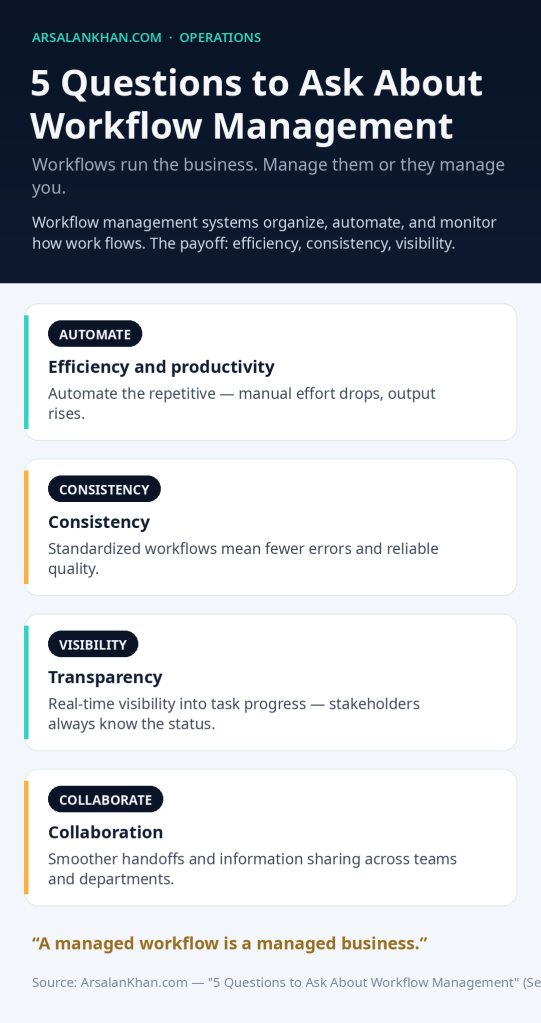
  • 5 Questions to Ask About Workflow Management

    Workflow management refers to the systematic organization, coordination, and automation of tasks and processes within an organization to achieve specific goals efficiently. It involves designing, executing, and monitoring sequences of activities that make up a workflow. These workflows can range from simple tasks to complex business processes that involve multiple teams and departments. Workflow management systems (WMS) help streamline operations, reduce manual effort, improve collaboration, and enhance overall productivity.

    The Pros of Workflow Management

    1. Efficiency and Productivity: Workflow management systems automate repetitive tasks, reducing manual effort and improving overall productivity.
    2. Consistency: Standardized workflows ensure consistency in how tasks are performed, minimizing errors and promoting quality.
    3. Collaboration: Workflow management fosters collaboration among teams and departments, enabling smoother handoffs and information sharing.
    4. Transparency: Workflow management systems provide real-time visibility into the progress of tasks, allowing stakeholders to track and monitor the status of projects.
    5. Process Improvement: Workflow management enables organizations to identify bottlenecks and inefficiencies in processes, leading to continuous improvement.

    The Cons of Workflow Management

    1. Initial Setup: Implementing workflow management systems may require time and resources for initial setup and integration.
    2. Learning Curve: Employees may need training to familiarize themselves with the new workflow management tools and processes.
    3. Resistance to Change: Some employees may resist adopting new workflows, preferring to stick to familiar methods.
    4. Customization Challenges: Tailoring workflow management systems to suit specific business processes can be complex and may require customization.
    5. Overlooked Complexity: Some complex processes may be challenging to model accurately within workflow management systems.

    Intriguing Questions about Workflow Management

    1. Who: Who within an organization is typically responsible for overseeing and implementing workflow management – project managers, business analysts, or IT teams?
    2. What: What are the key components of an efficient workflow management system, and how do organizations choose the right system for their needs?
    3. Where: Where do we see the most significant impact of workflow management – in industries like manufacturing, healthcare, or software development?
    4. When: When is the optimal time for organizations to implement workflow management – during periods of growth, process restructuring, or digital transformation?
    5. Why: Why is workflow management considered a critical practice for organizations seeking to streamline operations and improve efficiency?

    Conclusion

    Workflow management is a fundamental aspect of optimizing business processes and improving operational efficiency. By implementing workflow management systems, organizations can automate tasks, promote consistency, and enhance collaboration among teams. While there may be challenges in initial setup, customization, and employee adoption, the benefits of improved productivity, transparency, and process improvement make workflow management a valuable investment. As organizations continue to embrace digital transformation and seek ways to optimize their operations, workflow management plays a crucial role in ensuring efficient, streamlined, and goal-oriented processes that drive success in today’s competitive business landscape.

    Infographic: 5 Questions to Ask About Workflow Management